

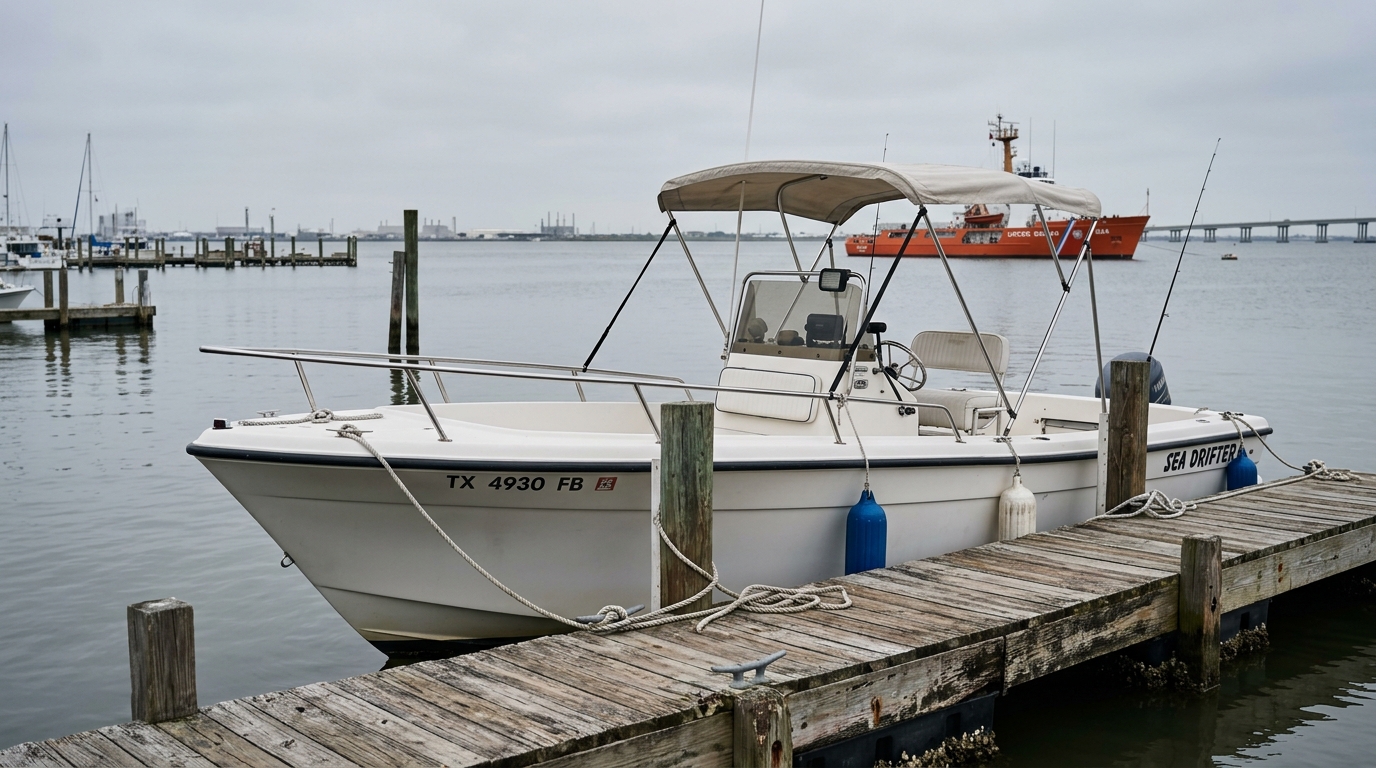
The Sinking Feeling: More Than Just a Bad Day on the Water
Seeing your boat sink in Galveston Bay is a nightmare scenario. In the chaos of the moment, your mind races through a checklist: Is everyone safe? Is the boat a total loss? But after the initial shock, a critical and often overlooked question emerges: who is responsible for the wreck sitting on the bottom? Many boaters in Galveston, Texas City, and around Clear Lake mistakenly believe their insurance company simply handles everything, or that the government will take care of it. The reality is far more complex and carries serious legal and financial consequences. The law is clear: the burden of removing a wrecked or sunken vessel falls squarely on the owner. Ignoring this responsibility isn't just an environmental hazard; it can lead to a direct legal order and a bill that could dwarf the value of the boat itself.
Navigating Federal Law: The Wreck Removal Act
The primary piece of federal legislation governing this issue is the Wreck Removal Act, which the United States has codified. While it’s an international convention, its principles are enforced in U.S. navigable waters, which include all of Galveston Bay, Offatts Bayou, and the Gulf Intracoastal Waterway. Under this act, the registered owner of a vessel is strictly liable for locating, marking, and removing any wreck that poses a hazard to navigation or the marine environment. A hazard isn't just a ship-sinking obstruction in the main channel; it can be any submerged object that threatens the safety of other vessels, disrupts the ecosystem, or damages the coastline. For a boater in Galveston, this means if your vessel goes down near the Galveston jetties or in the busy waters between Dickinson and League City, you have a non-negotiable legal duty to act.
Texas State Law: The Texas Water Code and Your Liability
Texas reinforces and expands upon federal law with its own statutes. The Texas Water Code explicitly prohibits abandoning a vessel on public waters. A vessel is considered abandoned if it has been left unattended for more than 48 hours on public water without a permit. More critically, a sunken vessel that is not properly marked and actively being addressed is quickly deemed an abandoned vessel and a public nuisance under state law. This classification gives Texas Parks and Wildlife Department (TPWD) game wardens and local law enforcement the authority to act. The state’s definition of liability is broad, capturing not just the owner of record but any titled owner. This means you can’t simply walk away from a wreck near the Texas City Dike or in the marinas of League City without triggering a chain of escalating legal problems.
The Enforcers: USCG vs. TPWD Wreck Removal Orders
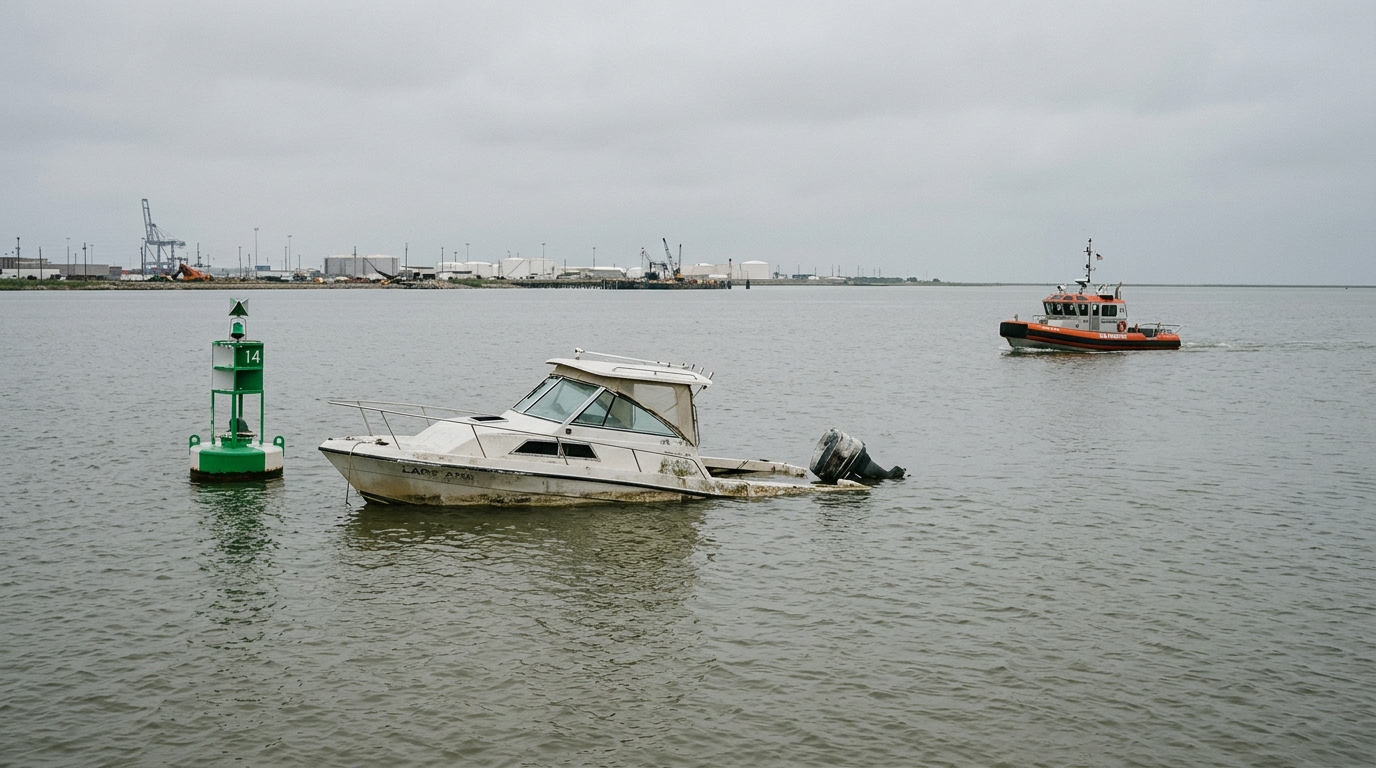
Understanding who can order you to remove a wreck is crucial. The U.S. Coast Guard (USCG) primarily addresses hazards to navigation and pollution threats. If your boat sinks in a federal channel, like the Houston Ship Channel or a heavily trafficked area of Galveston Bay, the USCG Captain of the Port can issue a direct order to the owner. This order will have a strict deadline. Simultaneously, a Texas Parks and Wildlife game warden can issue a removal order under state law for any abandoned vessel. You might receive an order from one or both agencies. The key difference is often the trigger: the USCG focuses on immediate safety and navigation, while TPWD focuses on the broader legal status of the vessel as an abandoned nuisance. For a boat owner near La Marque or Santa Fe, a report from a concerned citizen can be enough for TPWD to initiate a case.
Ignoring an Order: The Escalating Cost of Inaction
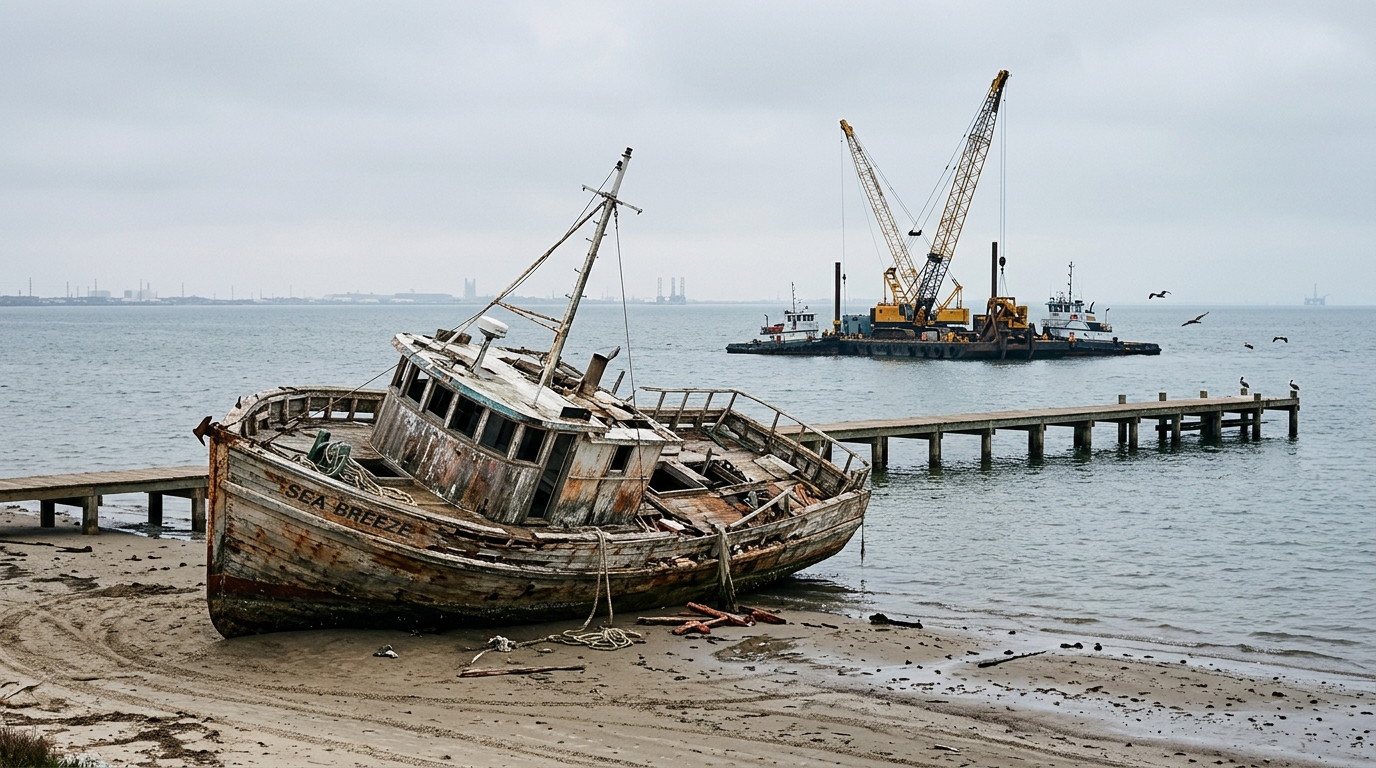
The most expensive mistake a boat owner can make is ignoring a removal order. When you fail to comply, the government doesn't just let the issue slide. The issuing agency is legally empowered to contract a professional marine salvage company to perform the removal. This is not a cost-effective solution for you. Government-contracted salvage operations are notoriously expensive, involving mobilization fees, specialized equipment, environmental protection measures, and administrative overhead. Once the wreck is removed, the full cost is billed to you, the vessel owner. If you don't pay, the government can place a lien on the vessel, seize it if it’s ever recovered, and pursue a civil judgment against you. For a Galveston boater, a $15,000 salvage job contracted by the government can easily become a $50,000 personal debt.
Beyond the Bill: Fines, Penalties, and Criminal Charges
The financial risk extends beyond just the salvage bill. Violating a federal removal order can lead to civil penalties of thousands of dollars per day of non-compliance. On the state level, abandoning a vessel is a Class C Parks and Wildlife Code misdemeanor, punishable by a fine of up to $500. While the criminal penalties may seem modest, they create a legal record and can complicate your ability to register other vessels. More significantly, if your unmarked wreck causes an accident that injures another boater on Clear Lake or damages another vessel near the Kemah Boardwalk, your liability explodes. You could face a civil lawsuit for negligence, potentially exposing your personal assets far beyond the value of the sunken boat. This is a risk that extends to every boater in Friendswood and Dickinson with a vessel moored in the area.
The Role of Boat Insurance in Wreck Removal
This is where proper boat insurance becomes your most critical asset. A standard boat insurance policy with wreck removal coverage can be the difference between a resolved incident and a financial catastrophe. Wreck removal coverage is typically a separate limit within your policy, distinct from the hull value. It pays for the reasonable costs of raising, removing, and properly disposing of your wrecked vessel. However, a policy only protects you if you take action. You must immediately report a sinking to your insurer. Your insurance company can then coordinate the salvage, ensuring it's done by a pre-approved contractor at a fair cost, while also managing the legal notifications to the USCG and TPWD. This proactive approach keeps you compliant with the law and prevents the government from stepping in.
Local Impact: Wrecks in Galveston Bay and Our Community
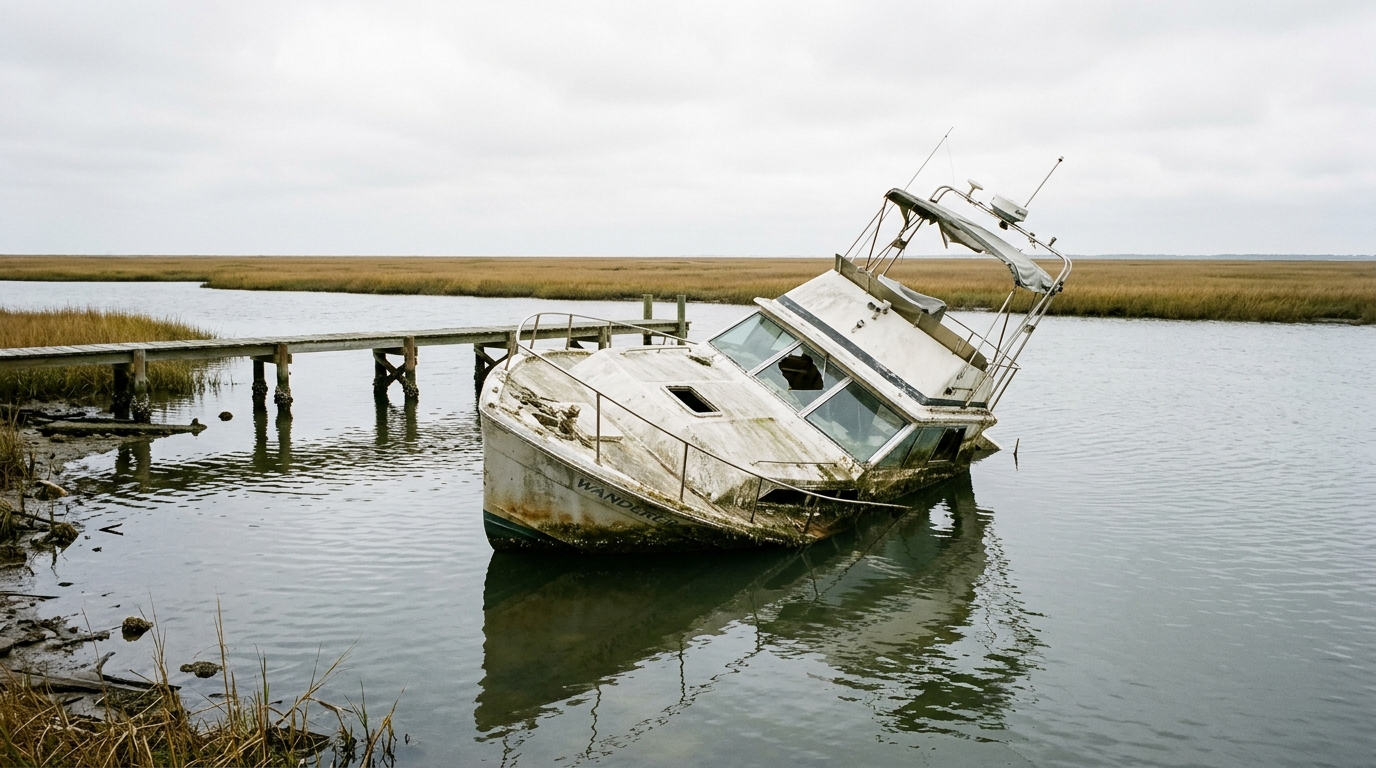
Wrecks aren't just a legal abstraction; they are a tangible problem in our local waterways. An unmarked wreck poses a constant threat to the fishing guides operating out of Galveston, the recreational boaters cruising from Clear Lake to Offatts Bayou, and the commercial shrimpers working the bay. A submerged vessel can destroy a lower unit, tear open a hull, and endanger lives, especially at night or in rough weather. Environmentally, a wreck slowly leaks fuel, oil, and battery acid into one of the most productive estuaries in the country. The community of League City, the marinas in Dickinson, and the waterfront restaurants in Kemah all suffer when a navigable waterway is compromised. Removing your wreck is not just a personal legal duty; it’s an obligation to the entire Galveston boating community and the health of our shared ecosystem.
Key Steps to Take Immediately After a Sinking
- Ensure Personal Safety: Account for everyone on board and contact the USCG on VHF Channel 16.
- Mark the Wreck: If safe to do so, immediately deploy a fender or buoy to mark the location and warn other boaters.
- Notify Your Insurer: Call your insurance agent or company's 24-hour claims line without delay to report the sinking.
- Document Everything: Take photos of the location, the vessel's condition, and your marking efforts for your records.
- Secure the Vessel: If the boat is partially submerged, work with a local salvage company to prevent it from breaking apart or drifting.

Proactive Protection: Securing Your Peace of Mind
The legal maze of wreck removal is daunting, but you don’t have to navigate it alone. The most effective step you can take is ensuring your boat insurance policy includes adequate wreck removal coverage before you ever leave the dock. As a local agency, The O'Donohoe Agency understands the specific challenges of boating in Galveston, from the busy Houston Ship Channel to the shallow flats. We can help you review your current policy to confirm you have this essential protection and that your limits are sufficient to cover a worst-case scenario without government intervention. By partnering with a knowledgeable agent, you ensure that if the unthinkable happens, you have a team ready to manage the salvage, deal with the authorities, and protect your financial future, letting you get back to enjoying the water.
Get a Free Review of Your Boat Insurance Policy Today
Don't wait until a crisis reveals a gap in your coverage. Contact The O'Donohoe Agency for a complimentary, no-obligation review of your current boat insurance policy. We’ll help you understand your wreck removal coverage limits, explain how Texas and federal laws apply to your specific situation, and ensure you’re not one accident away from a devastating financial liability. Our deep local expertise means we know the waters you boat on, from Texas City to Santa Fe, and we can tailor a policy that truly protects you. Reach out to our Galveston office today and boat with the confidence that comes from being fully protected.
