

The Critical Gap in Your Galveston Boat Policy
Imagine a perfect day on the water turns into a nightmare. You’re navigating the busy Galveston Ship Channel when your boat strikes a submerged object and begins taking on water fast. You call for a tow, but it’s too late—the vessel sinks. In this stressful moment, many Galveston boaters assume their insurance will handle the aftermath. The truth is, there is a massive, costly difference between calling for a tow and dealing with a wreck. Standard towing coverage is for breakdowns and soft groundings, but once a boat becomes a submerged hazard, you've entered the entirely separate world of wreckage removal. This distinction is not just a technicality; it’s a financial reality that can cost tens of thousands of dollars, especially when sinking occurs in a federally maintained waterway like the Ship Channel.
Defining the Roles: Towing Assistance on the Texas Coast
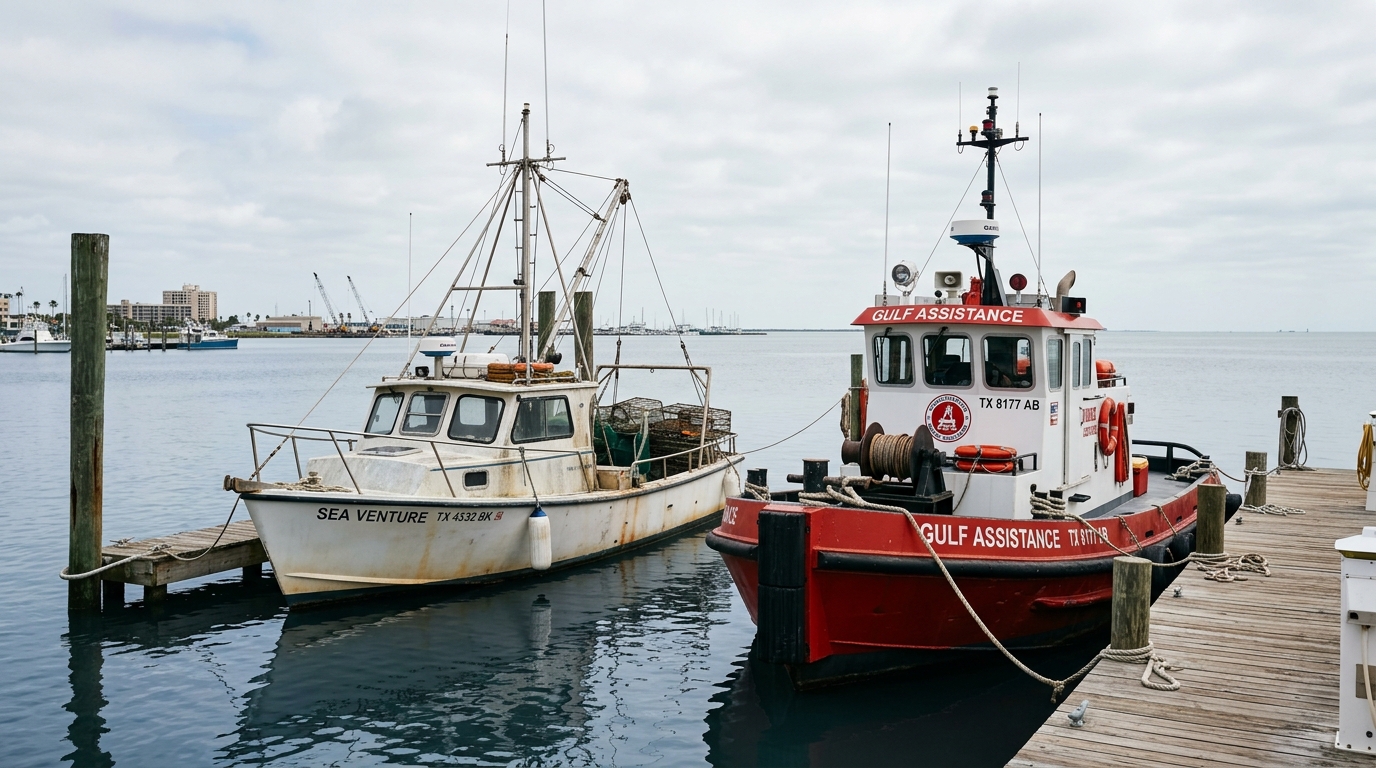
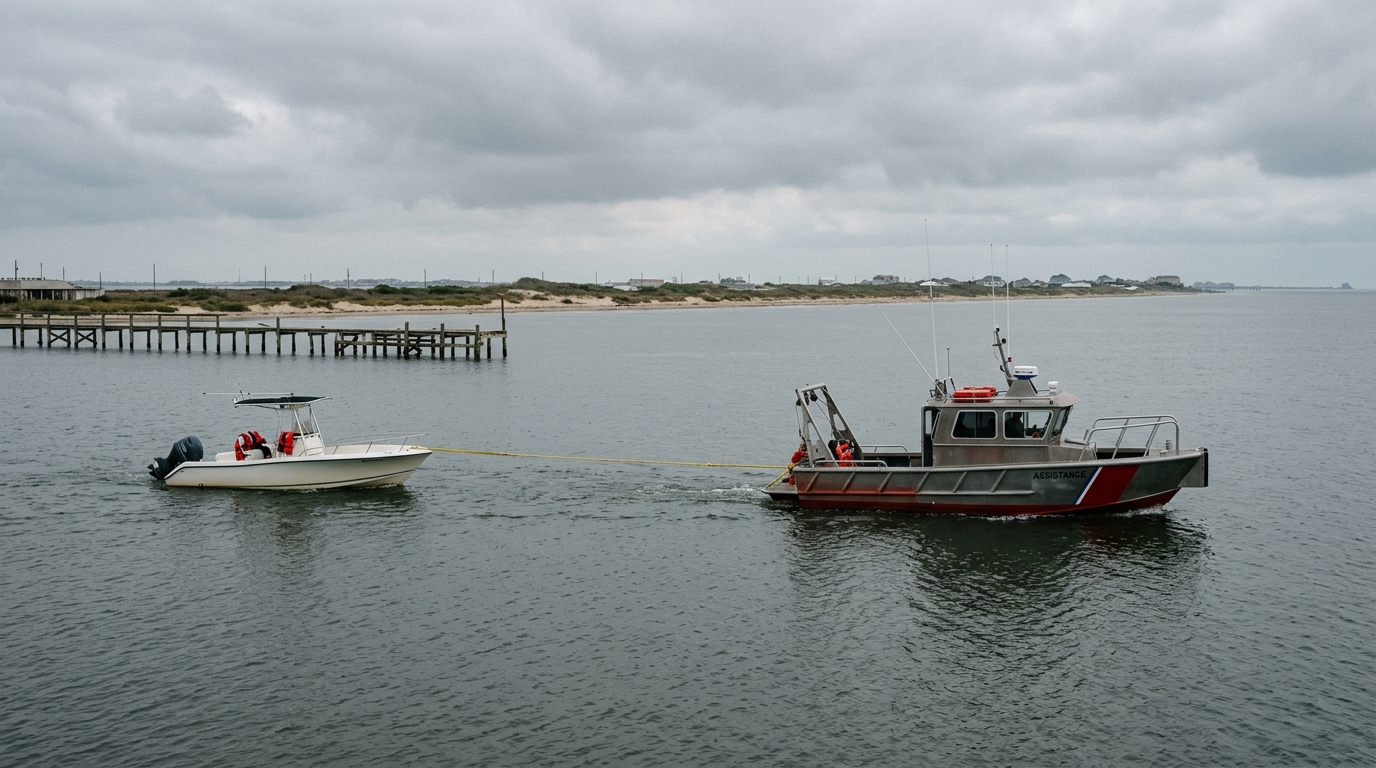
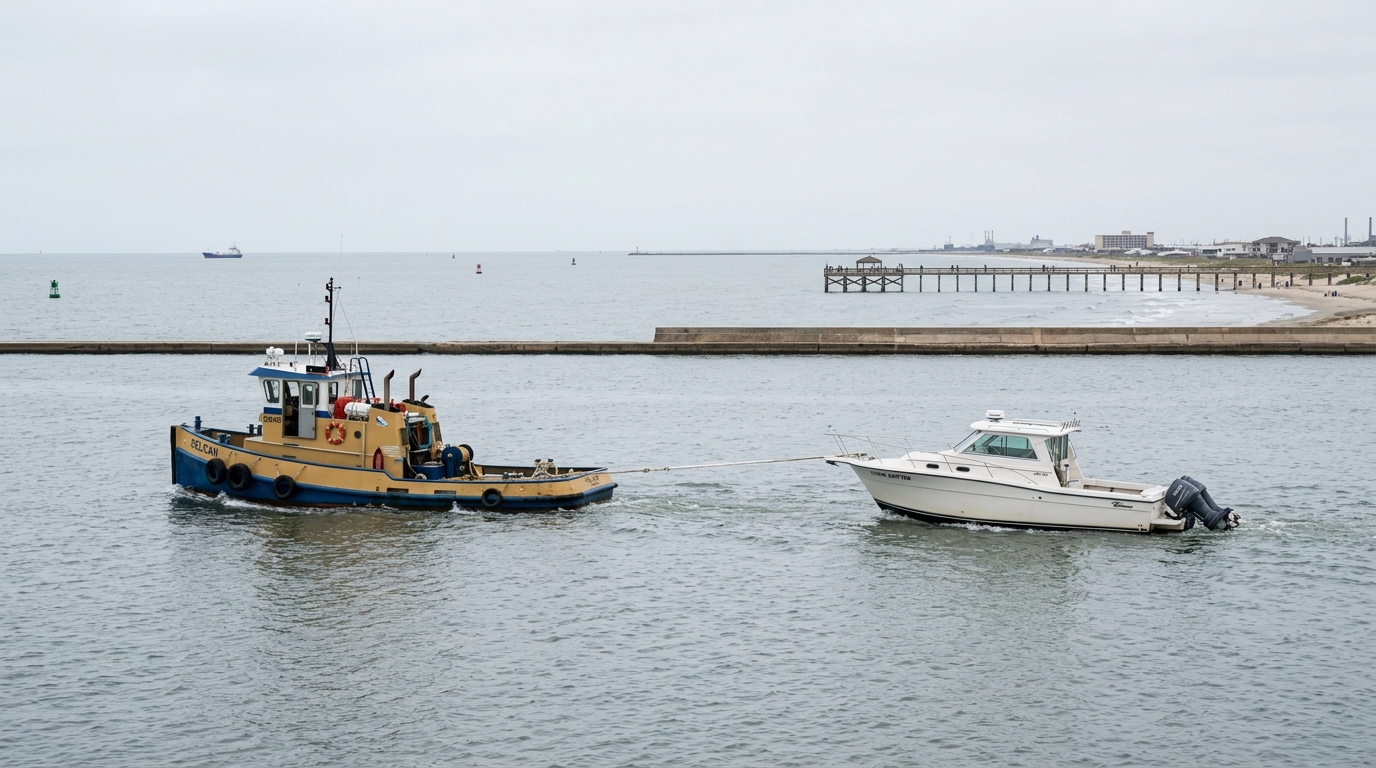
Marine towing coverage is essentially roadside assistance for the water. It’s designed to help when your boat is disabled but still afloat. Think of a dead battery near the Galveston Fishing Pier, a fouled prop in Offatts Bayou, or running out of fuel near the Texas City Dike. A towboat from a provider like TowBoatUS or Sea Tow will come to your location and safely bring your vessel back to your marina or a repair facility. This coverage typically has a per-occurrence limit, often between $500 and $1,500, which is usually sufficient for a standard tow. It is an emergency service for a floating vessel, not a salvage operation for a sunken one. The key word here is 'floating.' The moment a vessel sinks, even partially, the nature of the incident changes from a towing call to a salvage and potential wreck removal situation.
When a Breakdown Becomes a Wreck: The Legal Trigger
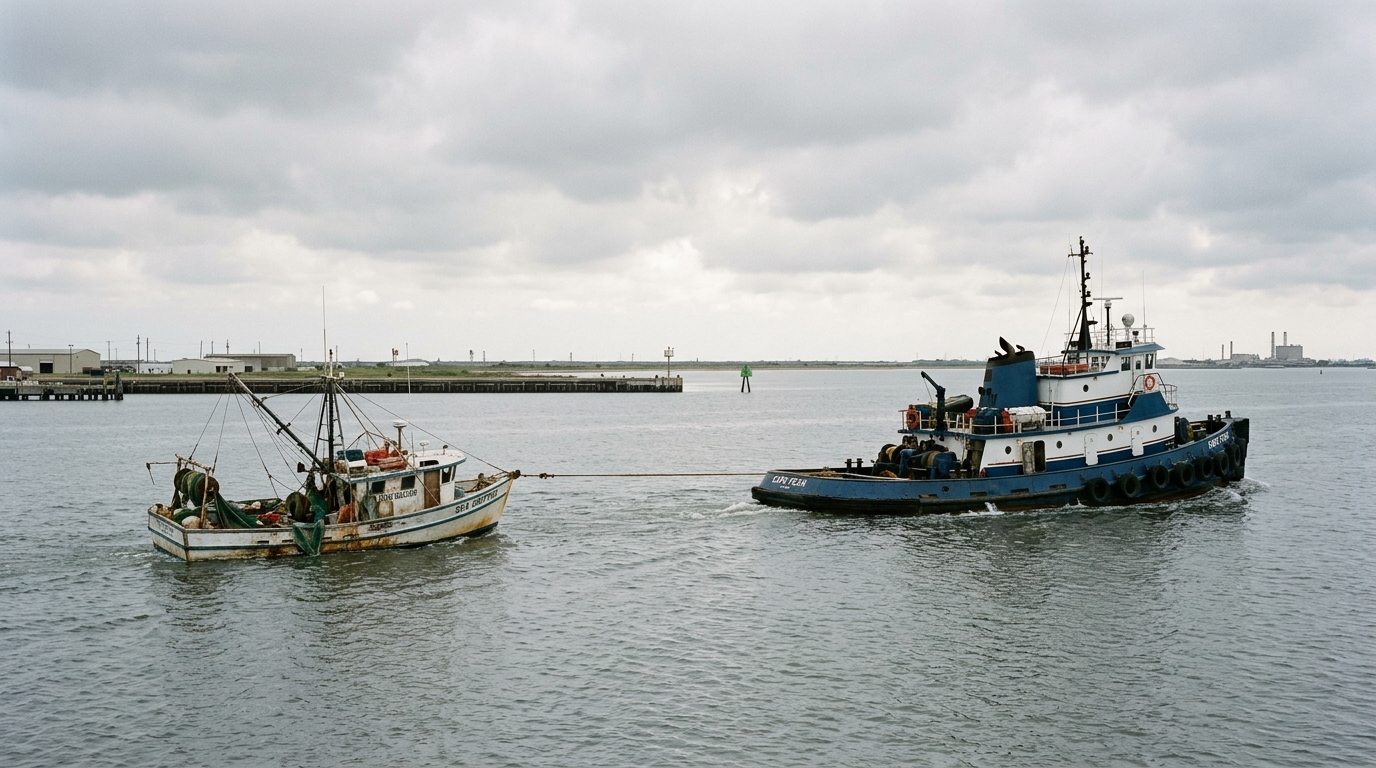
The legal definition of a 'wreck' is a vessel that has been sunk, stranded, or abandoned and poses a hazard to navigation or the environment. In Galveston, this definition carries immense weight due to the proximity of the Houston Ship Channel, one of the busiest ports in the nation. Federal law, enforced by the U.S. Army Corps of Engineers and the Coast Guard, mandates that the owner of a sunken vessel is responsible for its prompt removal. This is not a suggestion; it is a legal order with daily accruing fines. The transition from a tow to a wreck is instantaneous once the vessel settles on the bottom. Your towing captain isn't equipped or authorized to raise a sunken boat; their job was to prevent that sinking. Once it happens, a specialized salvage company with cranes, lift bags, and environmental containment gear is required.
Scenario Analysis: A Sinking in the Galveston Ship Channel
Let’s put this into a concrete, local scenario. A 26-foot center console is returning from a fishing trip near the Galveston jetties. In the Ship Channel, it collides with a semi-submerged shipping container lost overboard. The hull is breached, and the boat sinks in 40 feet of water. The owner’s first call is to their towing provider, who arrives and confirms the boat is a total loss on the bottom. The Coast Guard then issues a Captain of the Port Order, giving the owner 48 hours to present a salvage plan. The cost to hire a crane barge, a dive team, and to manage potential fuel leaks can easily exceed $25,000 to $50,000. Without a specific Wreckage Removal coverage clause in their boat insurance policy, the owner is personally liable for every single dollar of this operation. Their $1,000 towing limit is irrelevant.
The High Cost of Ignoring a Mandate
The financial exposure goes far beyond the salvage company’s invoice. If a boat owner in Galveston fails to act, the Coast Guard can contract the removal themselves and then bill the owner, a process that is notoriously more expensive due to government contracting procedures. On top of that, the state of Texas can levy fines for environmental pollution from leaking fuel and oil. Furthermore, if the sunken vessel causes an accident—say, a barge strikes it—the owner can be held liable for all resulting damages, a potential multi-million dollar claim. This liability is not covered under a standard Protection and Indemnity (P&I) clause unless wreck removal is explicitly included. The high currents and heavy ship traffic in the Galveston Ship Channel make this a uniquely high-risk area where a small problem can quickly escalate into a catastrophic financial event.
Bridging the Coverage Gap: What to Look For
Now that you understand the stark difference, the solution is to review your policy for a specific Wreckage Removal endorsement. This is not a standard inclusion on most basic boat insurance policies. You need to look for a line item that provides a separate limit of insurance, typically a percentage of the hull value (often 5% to 25%) or a fixed dollar amount, dedicated solely to the removal of a wreck. For a boat valued at $40,000, a 25% removal clause would provide $10,000 in coverage. While that’s a significant help, for a sinking in a challenging location like the Ship Channel, even that might not be enough. We recommend discussing higher limits with a knowledgeable agent. This coverage pays for the raising, removal, and proper disposal of the vessel, and often includes coverage for mandated environmental cleanup of fuel and oil spills directly related to the sinking.
Why Galveston Waters Demand This Specific Coverage
Boating in Galveston presents a unique combination of risk factors that make wreckage removal coverage not just advisable, but essential. The convergence of the Houston Ship Channel, the Intracoastal Waterway, and the open Gulf creates complex currents and shallow, shifting sandbars. A sudden squall in Galveston Bay can turn a routine trip into a dangerous situation in minutes. The water is often turbid, hiding submerged debris like the logs and containers washed out by heavy rains or storms. Unlike a placid inland lake, a sinking here is often in deep, high-traffic, or environmentally sensitive areas, triggering immediate federal oversight. Boaters from League City, Dickinson, and Clear Lake all converge on these same complex waterways, increasing traffic density. A policy written for generic lake use simply does not account for the federal legal mandates and high salvage costs inherent to our coastal and port environment.
Key Takeaways for Texas Boaters
- Know the Difference: Towing is for floating breakdowns; Wreckage Removal is for sunken vessels. They are completely separate coverages.
- Legal Responsibility: If your boat sinks in navigable waters like the Galveston Ship Channel, you are legally mandated to remove it at your own expense.
- Check Your Policy: A standard yacht or boat policy rarely includes significant wreck removal coverage. Look for a specific limit or endorsement.
- Assess the Risk: Boating in high-traffic, commercial waterways with strong currents demands higher removal coverage limits than a small inland lake.
- Get an Expert Review: A local agent familiar with Texas Gulf Coast boating can identify dangerous coverage gaps a generic online quote will miss.

Securing Your Peace of Mind on the Water
Don't wait for a crisis to discover a gap in your coverage. The difference between a $500 towing bill and a $50,000 wreck removal mandate is a single line in your insurance policy. As a boater in Galveston, Texas City, or anywhere along the upper Texas coast, you face specific challenges that demand a policy built for this environment. The O'Donohoe Agency specializes in helping local boaters understand these nuances. We can review your current boat insurance policy to see if your wreckage removal limits are adequate for the waters you navigate, from Clear Lake to the deep waters of the Gulf. Contact us today to ensure your time on the water is protected by a policy that truly understands the risks of Galveston boating.
