

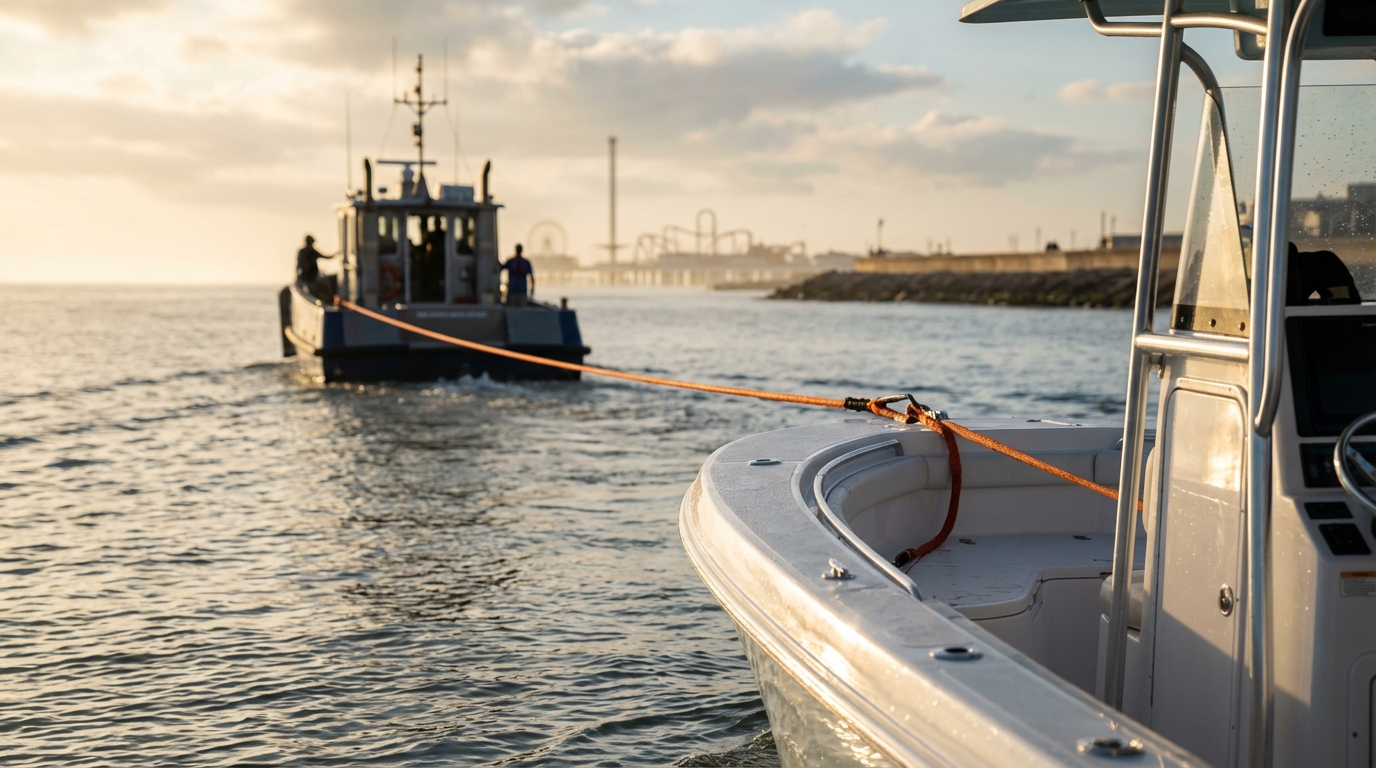
Why Towing Assistance Matters For Galveston Boaters
If you boat out of Galveston, you already know how quickly a routine day can turn into a “we need help” situation. A dead battery after anchoring, a fouled prop near the jetties, or an engine that won’t restart after a short run can leave you drifting at the worst possible time. Towing assistance is designed to pay for getting you back to a safe place, but it’s not a blank check. The fine print matters: where you’re towed, who can tow you, and whether the problem is considered a covered “disablement.” Understanding your towing coverage before you leave the dock is one of the easiest ways to prevent surprise bills.
Towing Coverage Basics: Marine Assistance Vs. Boat Insurance Endorsements
In Galveston, towing help usually comes from one of two places: a marine assistance membership (standalone service) or towing coverage added to your boat insurance policy as an endorsement. Both can work, but they’re not identical. Insurance towing coverage often reimburses you up to a limit per incident or per year and may require you to use an approved provider or submit documentation afterward. A membership plan may dispatch faster in some cases and can include soft ungrounding or jump starts, but it may still have geographic boundaries and exclusions. The key is to confirm what your policy calls towing: emergency assistance, marine assistance, or salvage, because salvage is treated very differently than a tow.
On-Water Towing Vs. Trailer Towing: What’s Usually Covered
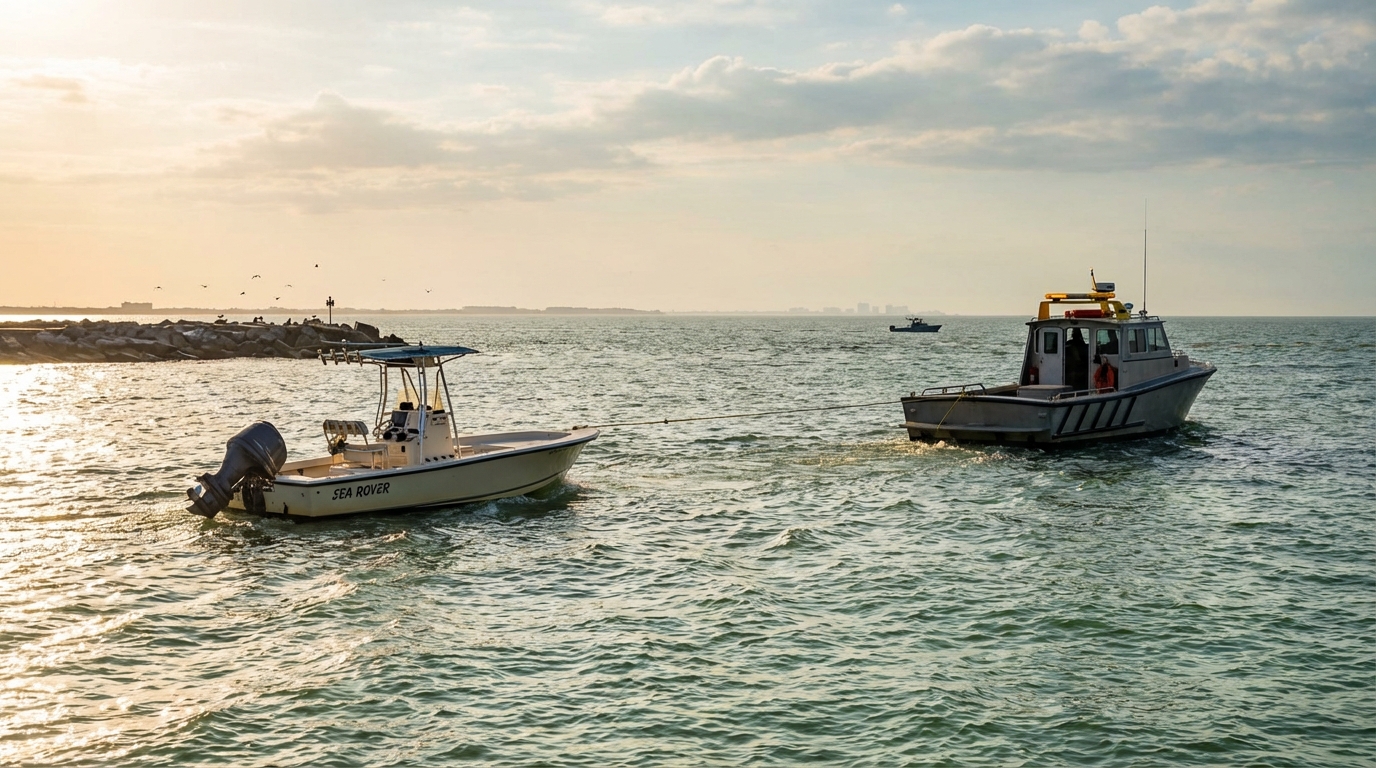
On-water towing generally means a licensed provider pulls your disabled boat to the nearest safe harbor, marina, or launch ramp. In the Galveston area, that might mean a tow back toward a marina near the Seawall, a ramp closer to Texas City, or another safe location depending on conditions. Trailer towing is different: it’s roadside assistance for the tow vehicle and trailer, such as a breakdown on I-45 or a flat near League City. Many boaters assume their boat policy covers trailer towing automatically, but it may be a separate add-on or handled by auto insurance. Ask your agent to spell out which towing you have, and whether the trailer itself has coverage for damage while being towed.
Common Limits: Service Call Caps, Distance Rules, And Reimbursement
Most towing assistance has at least one limit, and often several. A common structure is a per-tow limit (for example, a maximum dollar amount per incident) plus an annual cap on the number of service calls. Some policies also limit towing distance or define the destination as the nearest safe location rather than your preferred marina. Reimbursement rules matter too: you may need to pay the provider and submit receipts, or you may need pre-authorization before dispatch. In busy weekends around Galveston and Clear Lake, it’s smart to know whether you can call any reputable tower or if you must use a specific network. A quick policy review can prevent a tow from turning into a large out-of-pocket expense.
Common Exclusions That Surprise Galveston Boat Owners
The most common towing denials are tied to how the incident happened, not whether you truly needed help. Mechanical failure is sometimes covered for towing, but the repair itself usually is not, and some policies exclude towing if the failure stems from lack of maintenance. Examples include running with known cooling issues, ignoring oil pressure alarms, or operating with a clearly failing battery. Unsafe conditions can also trigger problems: operating in restricted areas, ignoring posted warnings, or continuing to run when conditions exceed safe limits for your vessel. Another big line is salvage versus towing. If you’re aground, taking on water, or in imminent danger, the response may be classified as salvage, which is usually covered under different policy terms and can involve higher costs.
When To Call For Help (And When Not To Wait)
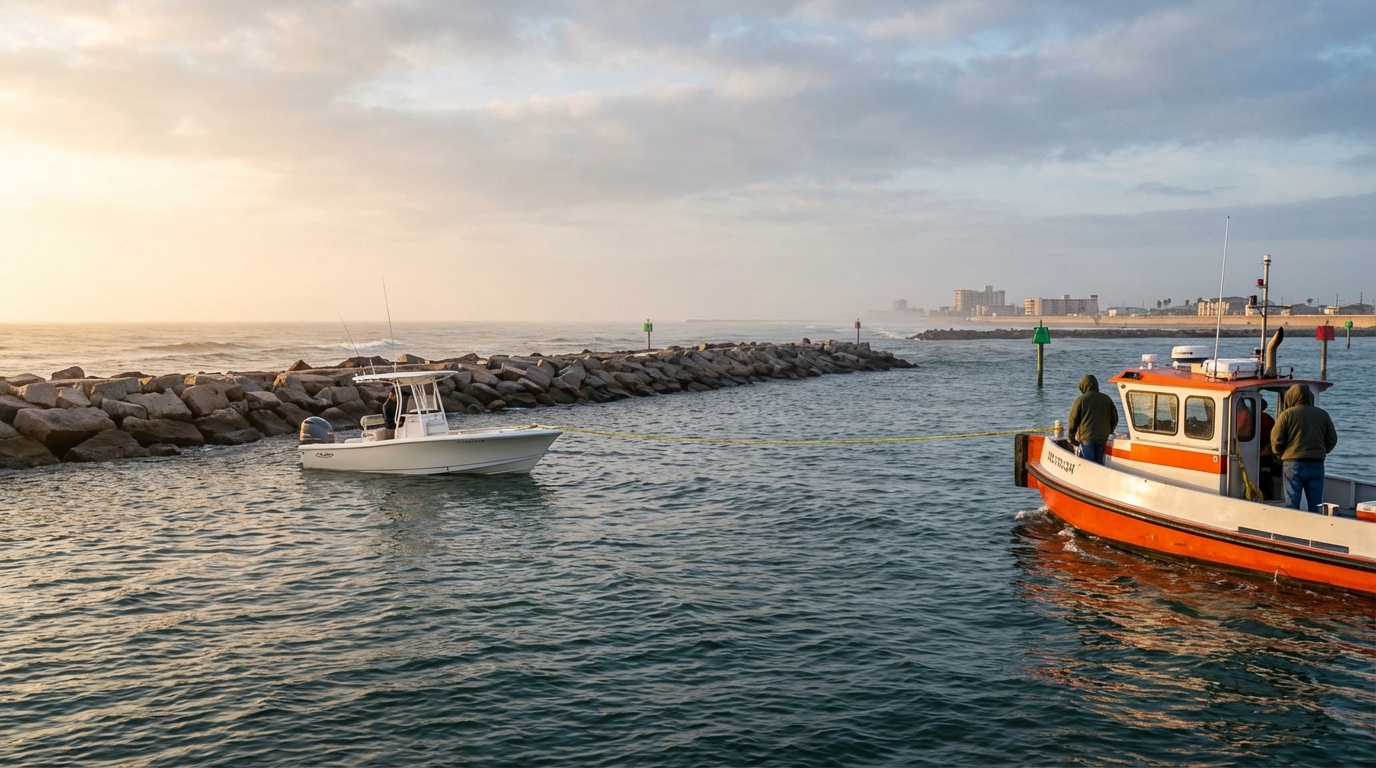
A good rule for Galveston Bay is to call early if you’re drifting toward hazards, losing daylight, or you can’t reliably restart the engine. If you’re near shipping channels, jetties, or heavy traffic areas, waiting can turn a simple tow into a safety emergency. Before you call, try the basics only if it’s safe: check your kill switch lanyard, battery switch position, fuel level, and whether the prop is fouled. Don’t attempt risky self-recovery in strong current or rough conditions. When you do call, share clear details: your exact location, number of people aboard, whether you’re taking on water, and what troubleshooting you’ve already done. That helps dispatch the right type of assistance and reduces delays.
Galveston-Specific Factors: Currents, Traffic, And Where Tows Typically End
Local conditions around Galveston can change the practical meaning of “nearest safe harbor.” Currents near the jetties and passes can move a disabled boat quickly, and heavy vessel traffic means you may need to prioritize safety over convenience. Many tows end at a marina, a protected slip, or a launch ramp that’s reachable given weather and sea state. If you trailer your boat and launch in nearby areas like Dickinson, La Marque, or Santa Fe, it’s worth confirming whether your on-water towing coverage applies once you’re off the trailer and in the water, and whether it extends into the broader Clear Lake area. The more you boat across Galveston, Texas City, and League City waters, the more important it is to confirm geographic boundaries and dispatch rules.
Key Takeaways Galveston Boaters Can Use Before The Next Trip
- Confirm which towing you have: on-water towing, trailer/roadside towing, or both, and whether you must use a specific provider network.
- Check your limits: per-incident dollar cap, annual service call limits, and whether the destination must be the nearest safe harbor or a specific marina.
- Know the big exclusions: lack of maintenance, unsafe operation, and situations that may be classified as salvage rather than towing.
- Save documentation: tow receipt, dispatch or case number, photos of the situation, and notes about what happened and when you called.
- Pair coverages wisely: towing gets you to safety, while mechanical breakdown coverage (if available) may help with certain repair costs after a covered failure.

Next Steps: Pairing Towing Assistance With Mechanical Breakdown Coverage
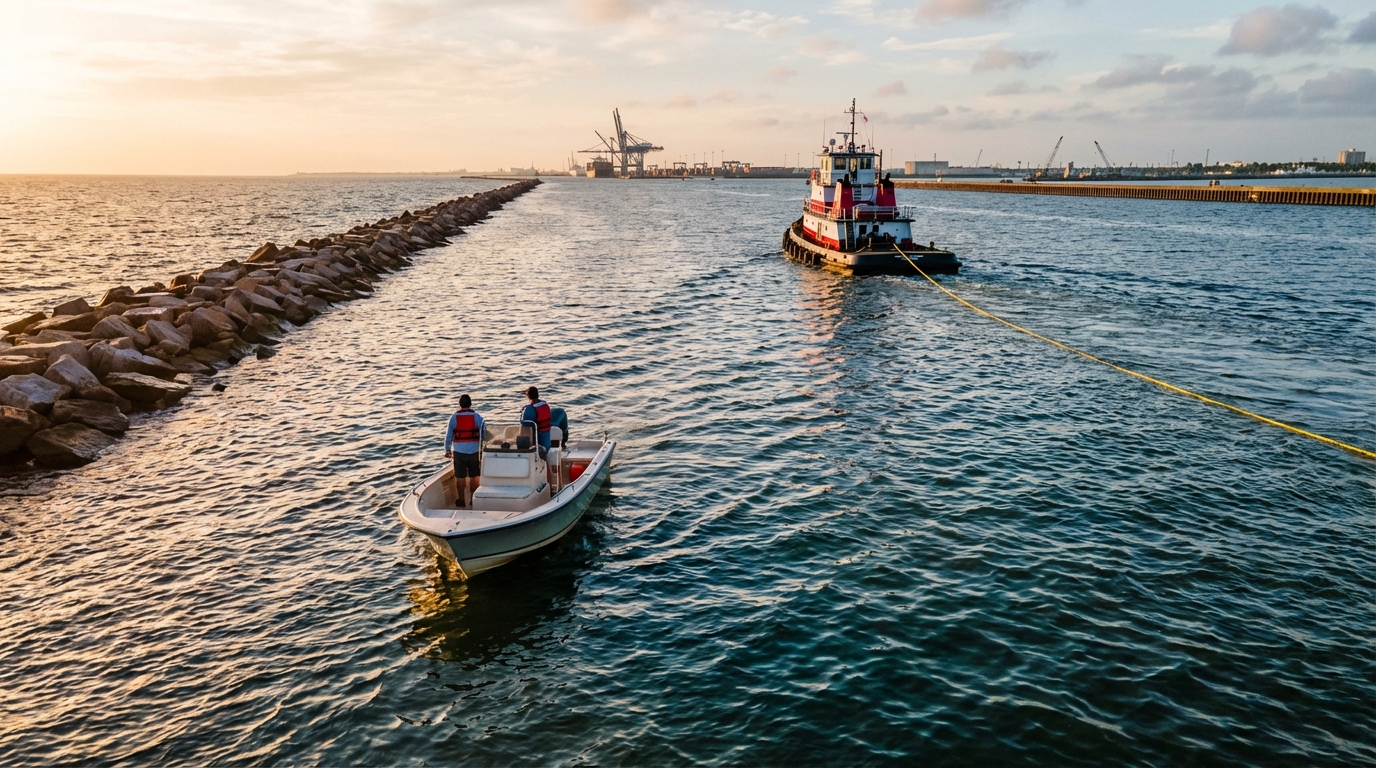
Towing assistance is about getting you and your boat to safety; it doesn’t automatically mean the engine repair is covered. That’s where mechanical breakdown coverage can matter, if it’s available for your boat and carrier. Mechanical breakdown coverage is often designed for sudden, accidental failure of certain components, but it may require proof of proper maintenance and may exclude wear-and-tear items. For Galveston boat owners, the best approach is to build a “disablement plan”: towing assistance for the immediate emergency, plus a realistic repair strategy once you’re back at the dock. Keep maintenance records, note engine hours, and document winterization or seasonal servicing. If you ever need to file a claim or request reimbursement, those records can be the difference between a smooth process and a frustrating denial.
Review Your Towing Coverage Before Your Next Galveston Trip
Want to know if your policy covers on-water towing, trailer towing, or both, and what exclusions could apply? The O'Donohoe Agency can help you compare options and set up coverage that fits how you boat around Galveston, Texas City, Dickinson, and Clear Lake.
Get My Quote