

Introduction: Why A Hull Coverage Checklist Matters In Galveston
If you keep a boat in Galveston, storm season isn’t abstract. Between Gulf wind, surge, and the way marinas and canals can change fast, the difference between a manageable claim and a coverage surprise often comes down to what you did before the storm. A hull policy is designed to help with physical damage to the boat, but it also has conditions, deductibles, and documentation expectations. This checklist is built for Galveston realities: haul-out decisions, mooring strategy, removing electronics, and creating a photo-and-receipt trail that makes adjusters’ jobs easier and your settlement smoother.
Context And Background: How Hull Coverage Typically Responds To Wind And Water
Hull coverage generally pays for sudden, accidental physical loss to the boat itself, subject to your policy terms. In storm scenarios, that can include wind-driven damage, impact with docks or other vessels, and water intrusion that results from a covered event. Where people get tripped up is the fine print: named storm or windstorm deductibles, navigation limits, lay-up periods, wear-and-tear exclusions, and requirements to take reasonable steps to protect property from further damage. In Galveston, it’s common to see claims complicated by battery failures, bilge pump issues, or pre-existing corrosion that shows up after a storm. Knowing what’s “storm damage” versus “maintenance” helps you plan and document correctly.
Main Point 1: Make The Haul-Out Or Relocation Call Early (And Document It)
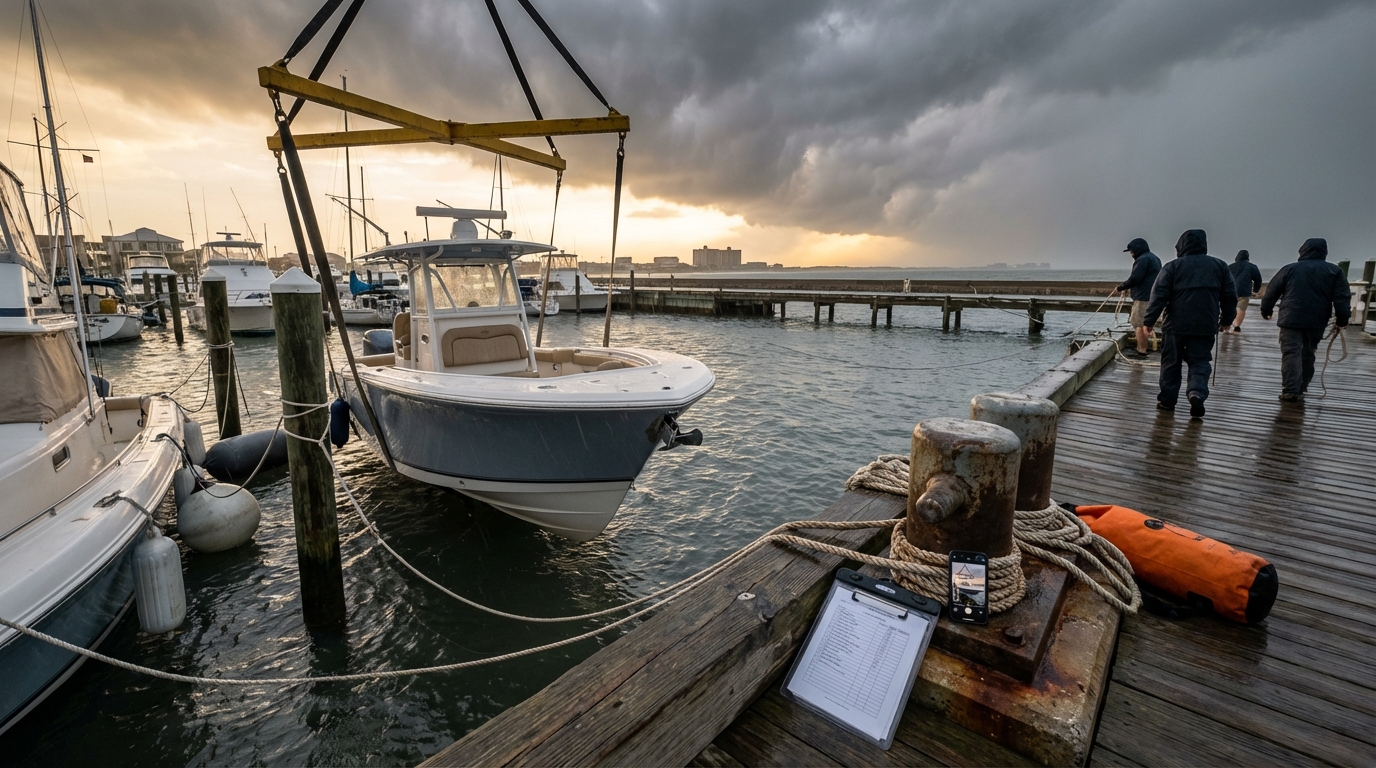
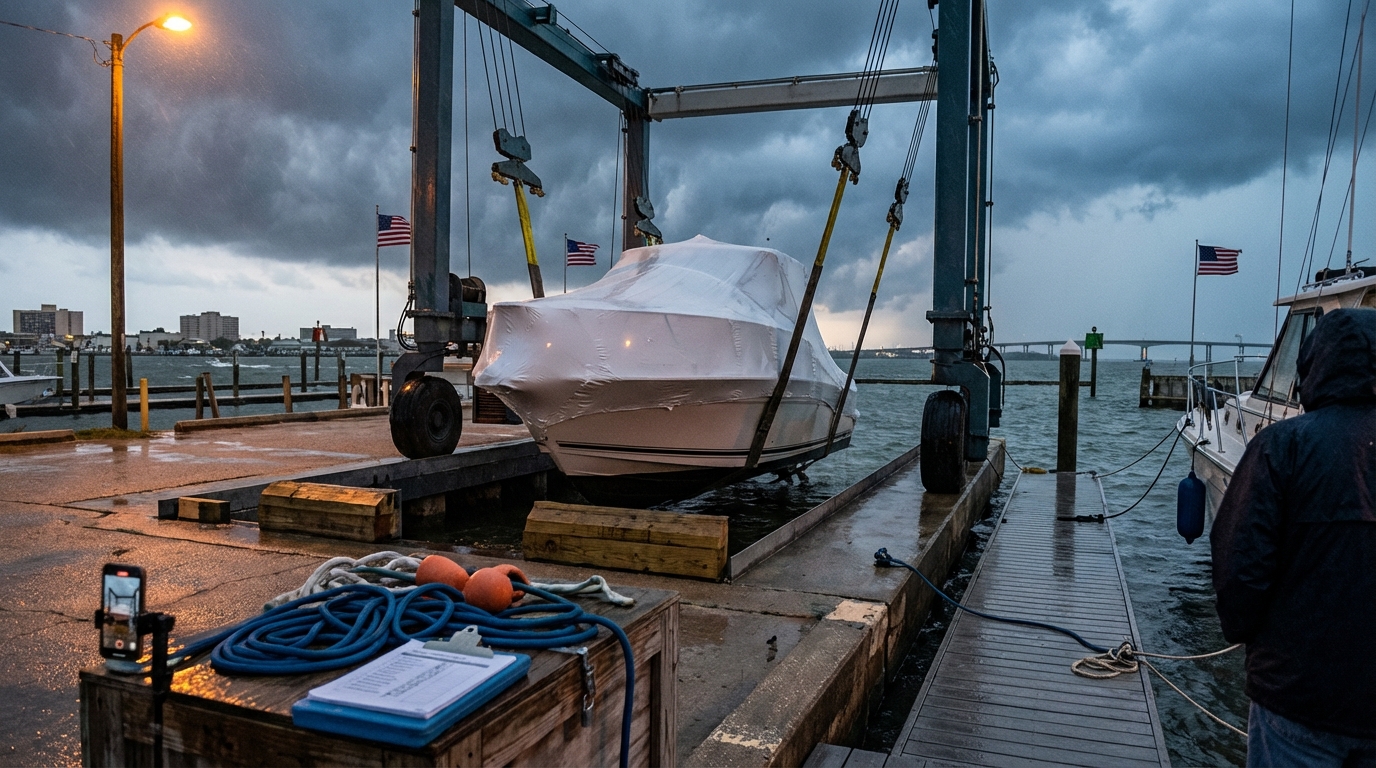
Your biggest decision is often whether to haul out, move inland, or secure in place. In Galveston, timing matters because yards, lifts, and storage fill quickly when a storm enters the Gulf. Start by checking your policy for any storm plan language, haul-out reimbursement endorsements, or requirements to relocate when a named storm watch is issued. Then make a written plan: where the boat will go, who will move it, and what triggers the move (for example, a forecast cone shift or a marina evacuation notice). If you decide not to haul out, document why, such as lift availability, medical limitations, or marina instructions. A simple log with dates, screenshots of advisories, and marina emails can be valuable later.
Main Point 2: Mooring And Docking Steps That Reduce Damage (And Disputes)
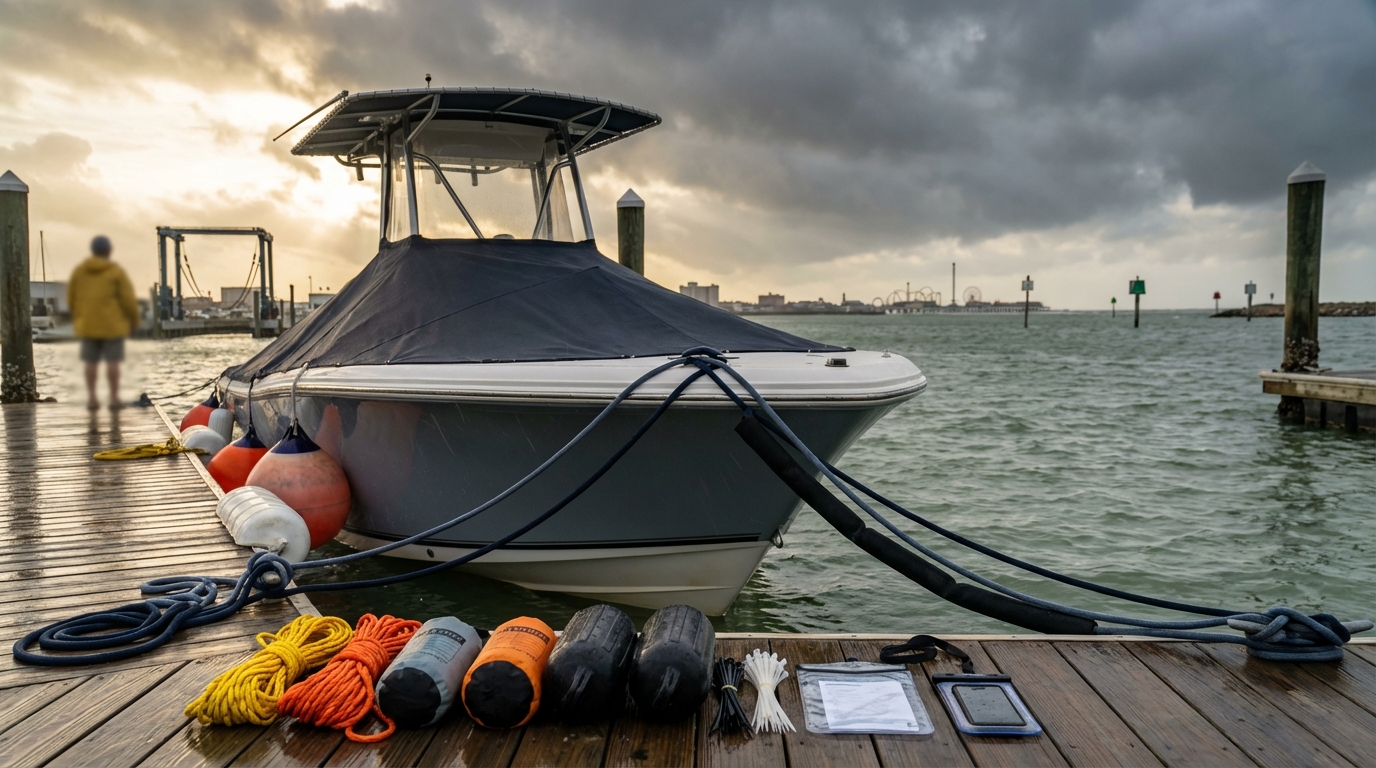
If your boat will ride out weather in Galveston Bay or a local marina, focus on preventing impact damage and chafe. Use doubled dock lines with chafe protection, add spring lines to limit forward-and-aft movement, and check cleats and pilings for integrity. Fenders should be oversized and positioned for surge, not just normal tide. Remove or secure sails, canvas, biminis, and anything that becomes a wind sail. If you’re on a trailer, verify tire pressure, wheel chocks, and that the trailer is anchored or moved to higher ground away from trees and flood paths. Take dated photos of every line run, cleat tie-off, and fender placement. Those photos show you took reasonable steps, which can matter if questions come up during a claim review.
Main Point 3: The Documentation Stack: Photos, Receipts, Serial Numbers, And Electronics
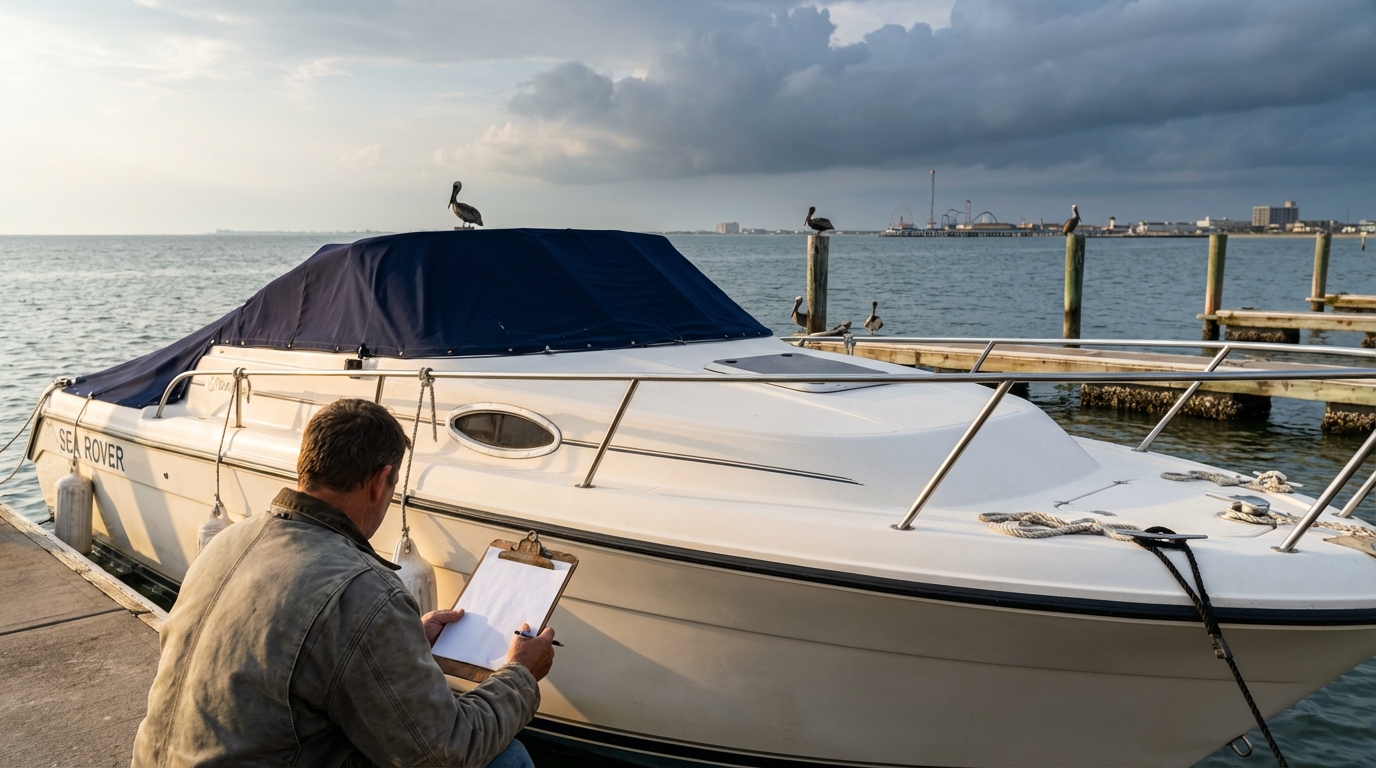
The fastest claims usually have the cleanest documentation. Before storms threaten Galveston, build a “hull coverage folder” on your phone and in cloud storage. Start with a walkaround video and close-up photos of the hull, transom, prop, lower unit, topside gelcoat, and any existing scratches so there’s a baseline. Photograph the HIN, registration decals, trailer VIN (if applicable), and engine hours. Save receipts for recent maintenance, upgrades, and safety gear because those can support value and ownership. For electronics, take pictures of installed units, then remove portable items like handheld GPS, tablets, radios, and personal gear. If fixed electronics can’t be removed, photograph model/serial numbers and consider covering and elevating components where practical. Keep a simple inventory list so you can report losses accurately.
Local Relevance: Galveston-Specific Risks To Plan For
Galveston’s mix of open Gulf exposure, bay-side marinas, and low-lying areas means your plan should account for both wind and water. Storm surge and heavy rainfall can push water into slips, canals, and storage lots, while wind-driven chop can cause repeated dock impacts. Saltwater intrusion after a storm can also accelerate corrosion and electrical problems if the boat sits wet. If you’re near Texas City, League City, Dickinson, La Marque, Santa Fe, Friendswood, or Clear Lake, your risk profile may change based on how protected your marina is and how quickly roads flood, which affects access for last-minute prep and post-storm inspections. The practical takeaway is to plan for access issues: keep spare lines and tools on board, store digital copies of your policy and ID, and know your marina’s storm procedures before you need them.
Key Takeaways: Pre-Storm Hull Coverage Checklist For Galveston
- Confirm policy details now: named storm or windstorm deductibles, navigation limits, lay-up periods, and any storm plan requirements.
- Decide early: haul out, relocate inland, or secure in place; write down your trigger points and save marina communications.
- Secure for surge and chafe: double lines, add chafe gear, use spring lines, and place oversized fenders for higher water.
- Reduce wind load: remove canvas, sails, loose deck gear, and anything that can become airborne or tear off.
- Build your documentation stack: pre-storm video, hull/engine photos, HIN/VIN shots, serial numbers, and receipts for upgrades and maintenance.
- Protect electronics and valuables: remove portable items, photograph installed units, and keep an inventory list for accurate reporting.
- Plan post-storm access: keep digital policy copies, emergency contact numbers, and a checklist for first inspection and mitigation steps.

Next Steps: What To Do Immediately After A Storm Loss
After a storm, safety first and documentation second. If it’s safe to access your boat in Galveston, take wide photos before moving anything, then close-ups of damage: hull breaches, waterline marks, impact points, and interior water intrusion. Prevent further damage where you reasonably can, such as tarping a broken hatch, pumping out water, or moving the boat away from a sinking hazard, but avoid permanent repairs until you’ve documented thoroughly and reported the loss. Keep every receipt for emergency mitigation, towing, haul-out, storage, and temporary repairs because those costs may be covered depending on your policy. Report the claim promptly with a clear timeline: when you last saw the boat undamaged, what storm conditions occurred, and what you found afterward. If multiple boats were involved in a dock incident, write down slip numbers and take photos of surrounding vessels to help establish what happened.
Want A Quick Hull Coverage Review Before The Next Gulf Storm?
The O'Donohoe Agency can help Galveston boaters spot named-storm deductibles, coverage gaps, and documentation tips before you need to file a claim. Request a quote or a policy review to make sure your storm plan matches your coverage.
Get My Quote