

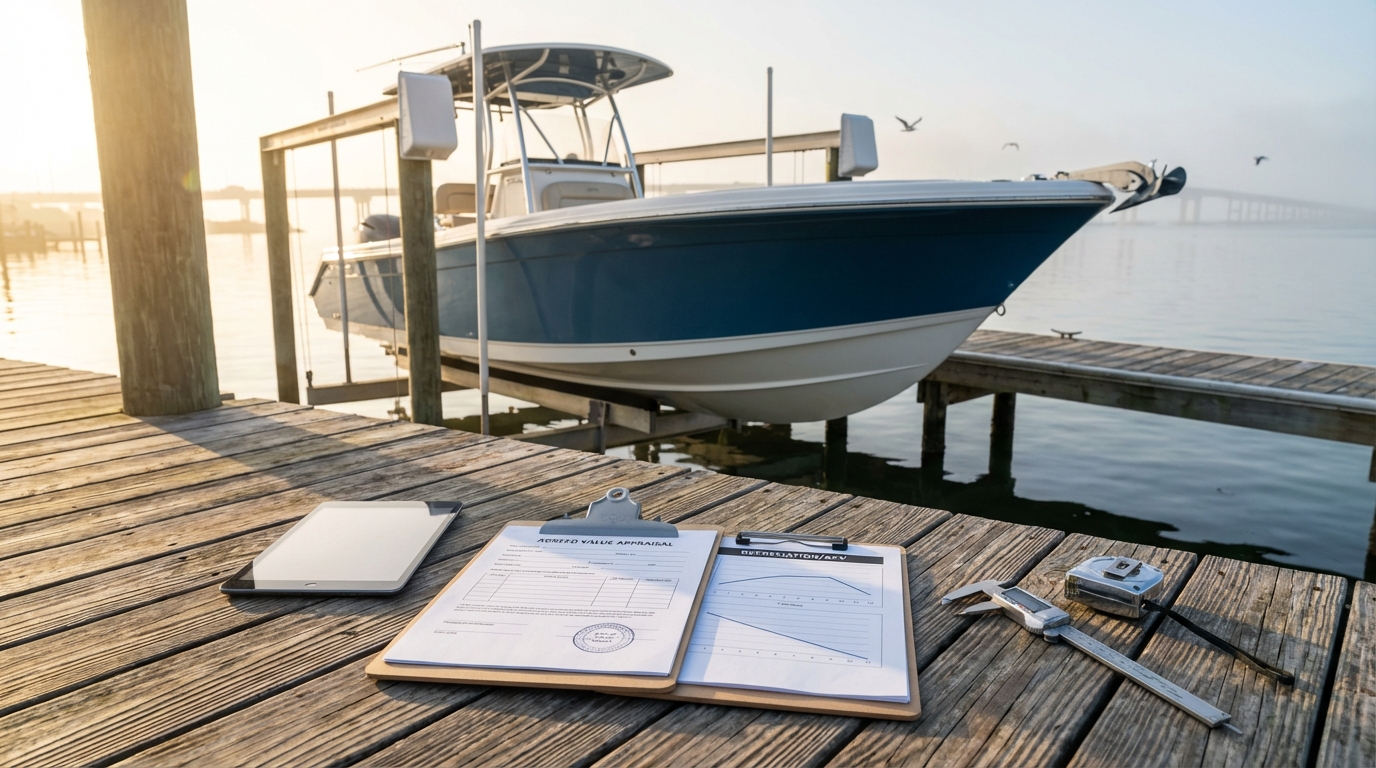
Hull Coverage Basics: Why The Settlement Method Matters
If you keep your boat in Galveston, hull coverage isn’t just a checkbox on the policy—it’s the part that determines what you actually get paid if your boat is stolen, sinks, burns, or is totaled in a storm. The biggest difference between policies often comes down to one question: will the insurer settle your hull claim using agreed value or actual cash value (ACV)? In plain terms, agreed value aims to pay the amount you and the carrier agreed the boat was worth (subject to the policy terms), while ACV pays what the boat is worth at the time of loss after depreciation. Understanding this before hurricane season or a busy summer on the water can prevent a painful surprise later.
Galveston Context: Saltwater, Storms, And Seasonal Use
Galveston boats age differently than boats that live on inland lakes. Saltwater exposure, humidity, and sun can accelerate corrosion, gelcoat oxidation, and wear on wiring, pumps, and metal components. Add storm exposure—named storms, surge, and high-wind events—and valuation becomes more than a simple “book value” conversation. Seasonal use also matters: many Galveston owners run hard from spring through early fall, rack up engine hours, and do quick repairs to stay on the water. Those real-world factors can influence how an adjuster views condition and depreciation on an ACV policy. That’s why it’s smart to match your hull settlement method to how you store, maintain, and use your boat around Galveston, Texas City, and Clear Lake.
Agreed Value Explained: When Predictability Is The Point
Agreed value hull coverage is designed to reduce valuation arguments after a major loss. You and the insurer agree on a hull value up front (often based on a purchase price, recent appraisal, or marine survey), and that number is used as the starting point for a total loss settlement. This can be especially helpful in Galveston where storm losses can total a boat quickly, and you want clarity on the payout amount rather than a debate about depreciation. Agreed value is commonly a good fit for newer boats, well-kept offshore fishing boats, or owners who have invested heavily in upgrades and want a settlement method that better reflects that investment. The tradeoff is premium: you’re paying for that predictability.
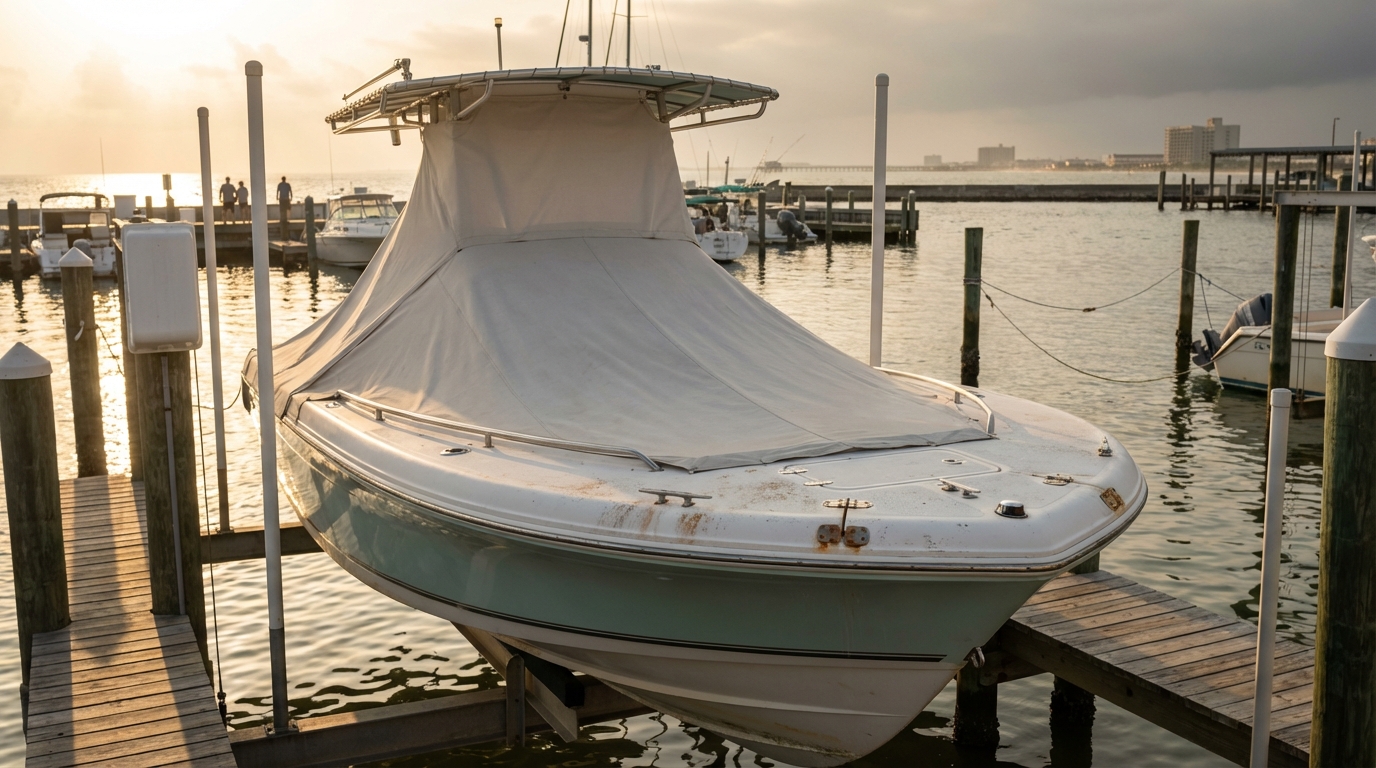
Actual Cash Value (ACV) Explained: Depreciation Drives The Outcome
ACV hull coverage typically costs less, but it places more weight on depreciation and condition at the time of loss. ACV is essentially replacement cost minus depreciation, and depreciation can be influenced by age, engine hours, maintenance history, prior damage, and overall condition. In a Galveston claim scenario, an adjuster may look closely at corrosion, electronics condition, soft spots, upholstery wear, and whether the boat has been kept in the water year-round. Two identical models can settle very differently if one has documented maintenance and indoor storage while the other shows saltwater neglect. ACV can make sense for older boats, budget-focused owners, or boats where the market value is already well understood and you’re comfortable with a settlement tied to current market conditions.
Surveys, Appraisals, And Documentation: What Insurers Expect
Whether you choose agreed value or ACV, documentation is your best friend—especially along the upper Texas coast where condition issues can appear faster. Many carriers require a marine survey for certain ages, horsepower ranges, or higher-value boats, and surveys are also a practical way to support an agreed value number. A good survey documents hull condition, systems, safety equipment, and often includes a valuation estimate. If you’re in Galveston, League City, or Friendswood and you trailer to different ramps or marinas, keep records that show how you store and maintain the boat. Maintenance invoices, engine service logs, winterization receipts, and photos of the boat pre-season can all help. In an ACV claim, these details can reduce arguments about condition; in an agreed value policy, they can support renewal value and reduce the chance of disputes.
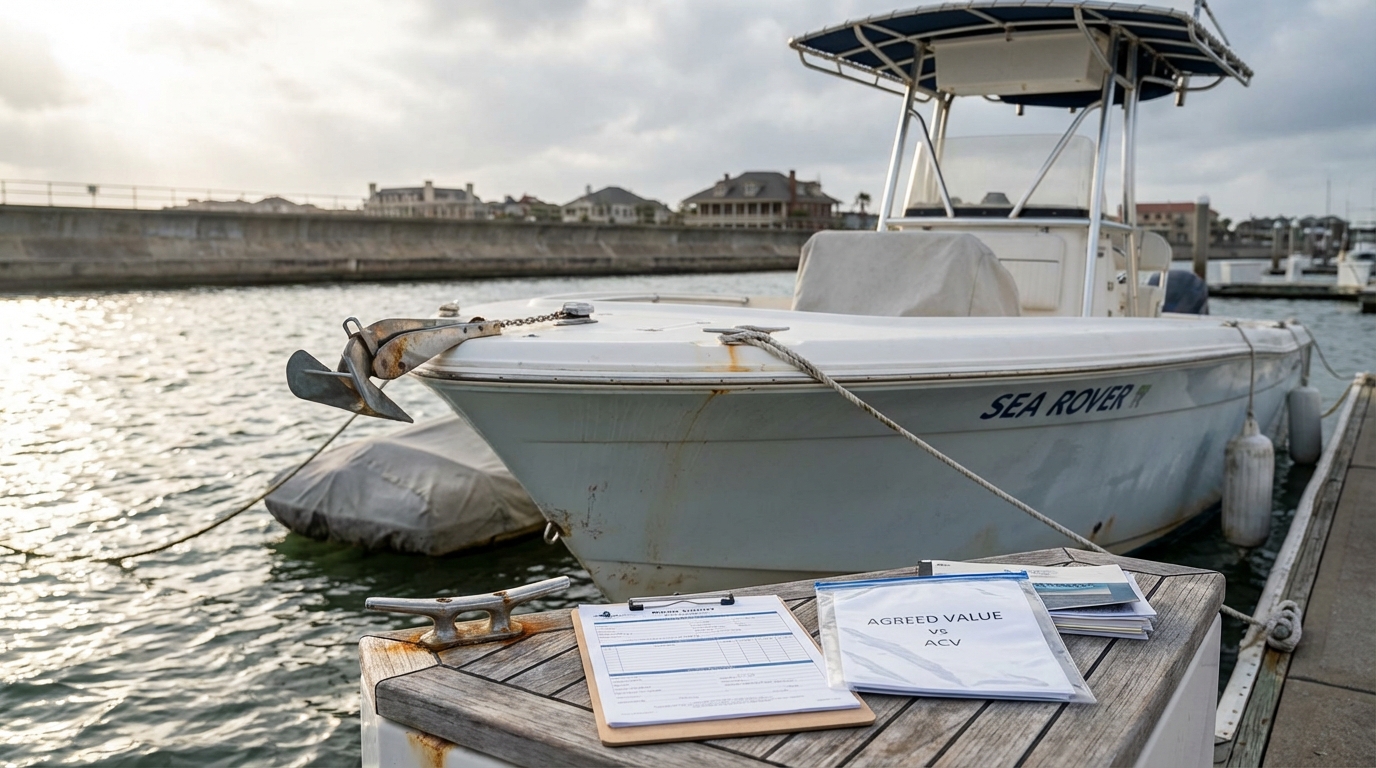
How Upgrades And Add-Ons Affect Hull Value In Real Life
A common Galveston question is: “If I upgrade electronics or repower, will I get that money back in a claim?” The honest answer is: it depends on how the policy treats upgrades and whether they’re documented. On an ACV policy, improvements can help, but depreciation still applies and the carrier may not credit every dollar you spent—especially for items that are already aging or considered wear-and-tear. On an agreed value policy, upgrades are often best handled by updating the agreed value at renewal or when major changes occur, backed by receipts and photos. Examples include repowering, adding a T-top, upgrading radar/sonar, installing a new trailer, or adding high-end navigation and audio. If you fish offshore out of Galveston and your electronics package is a big part of your boat’s functional value, it’s worth making sure your coverage structure matches that reality.
Local Relevance: Galveston-Specific Claim Scenarios To Think Through
Choosing agreed value vs ACV is easier when you picture the claim that would hurt the most. In Galveston, common high-severity scenarios include storm surge at marinas, wind-driven damage to canvas and tops, boats breaking loose from moorings, and flooding that totals engines and electrical systems. Another local issue is saltwater intrusion after heavy rain or a failed bilge setup, which can trigger expensive corrosion and system failures. If your boat is kept in the water near Galveston Island, or you frequently run through rougher conditions toward the jetties, your wear profile may look different than a lightly used bay boat kept on a trailer in Santa Fe or Dickinson. The right settlement method should match your storage plan, hurricane-season haul-out strategy, and how quickly you’d need funds to get back on the water.
Key Takeaways For Choosing Agreed Value Vs. ACV In Galveston
- Agreed value is about predictability: you’re pre-setting the hull value to reduce payout uncertainty after a total loss, which can matter during storm season in Galveston.
- ACV is about lower premium and market-based settlement: expect depreciation and more emphasis on condition, maintenance history, and saltwater wear at the time of loss.
- Surveys and documentation help both options: a marine survey, service records, and pre-season photos can support value and condition when a claim happens.
- Major upgrades should be planned for: keep receipts and photos, and consider updating your agreed value (or confirming how upgrades are treated) so improvements aren’t undercounted.
- Match the policy to your boat type and use: newer offshore boats and high-upgrade rigs often fit agreed value; older boats or tighter budgets may fit ACV if you can absorb depreciation risk.

Next Steps: Pick The Right Hull Settlement Method For Your Boat
The best way to choose between agreed value and ACV is to run a simple stress test: if your boat were a total loss tomorrow in Galveston, what payout would you need to replace it with something comparable, and how much depreciation could you realistically absorb? Then consider your storage (wet slip vs trailer), your maintenance habits, and whether you’ve made upgrades that aren’t captured by generic pricing guides. If you’re unsure, The O'Donohoe Agency can help you compare hull settlement options side-by-side, review survey requirements, and make sure your value reflects how you actually use your boat around Galveston, Texas City, League City, La Marque, and Clear Lake. A quick review now can save weeks of frustration after a claim.
Compare Agreed Value Vs. ACV Quotes In Galveston
Get a hull coverage comparison tailored to Galveston conditions, your boat type, and your budget. We’ll help you understand the settlement method before you buy.
Get My Quote