

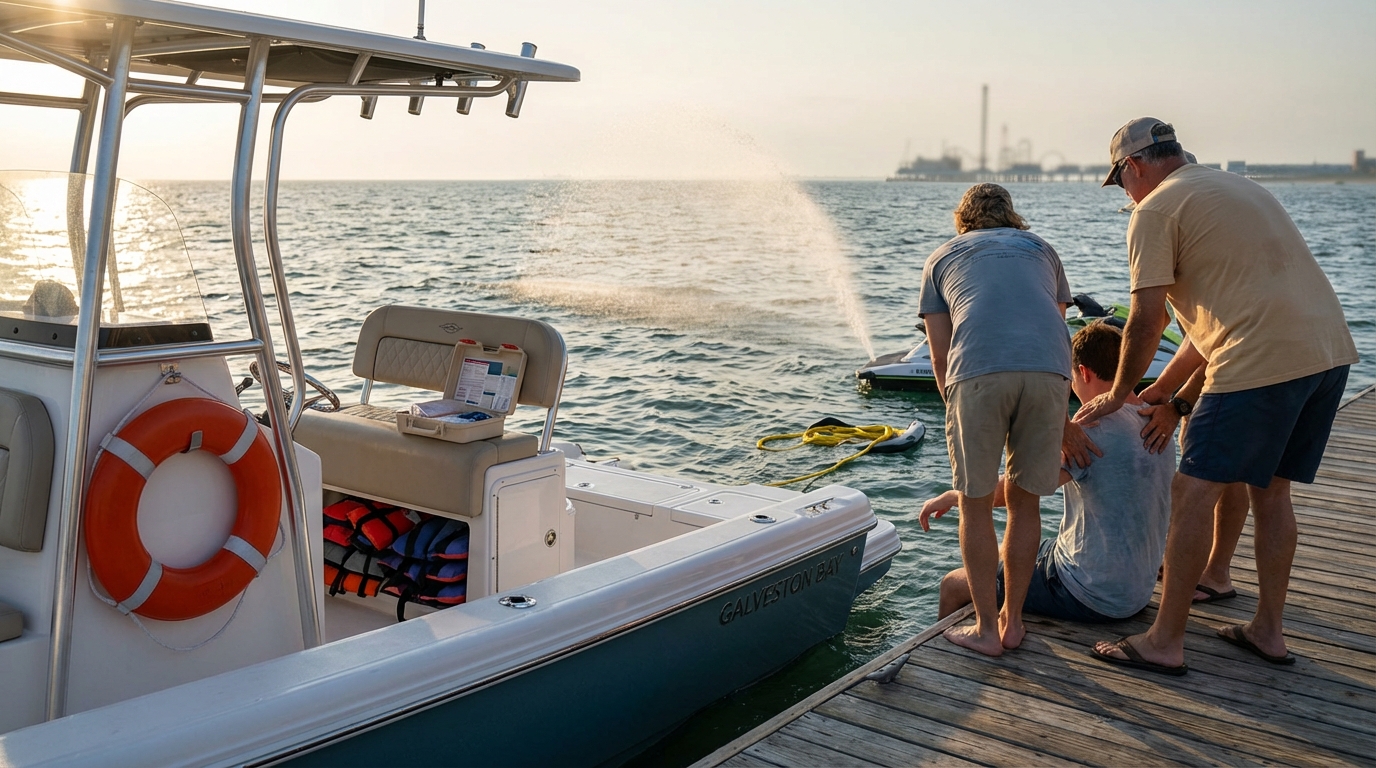
Introduction: Why Tow-Sports Coverage Questions Come Up So Often In Galveston
On a busy Galveston weekend, it’s normal to see a tube or wakeboard behind a boat as families head out near the bay, canals, and popular launch areas. The problem is that tow-sports accidents don’t always look dramatic at first, but they can create real injuries and real claims: a rider catches an edge, a tube slingshots into chop, or a spotter misses a hand signal and the driver accelerates too soon. If you’re the boat owner or operator, the big question becomes: which part of your policy responds? In this article, we’ll break down how boat liability coverage and medical payments (MedPay) coverage typically work in Galveston, TX, and how to make sure your policy is actually set up for towing.
Context And Background: What Makes Tow-Sports Claims Different From Regular Boating Incidents
Tow sports add moving parts to an already dynamic environment: a driver watching traffic and water conditions, a spotter tracking the rider, tow lines under tension, and riders who may be inexperienced. Around Galveston, conditions can change quickly with wind, boat traffic, and rougher water that increases wipeouts and neck/shoulder injuries. From an insurance standpoint, tow-sports claims also create more “who is responsible?” questions. Was the operator negligent, or did the rider take an obvious risk? Was a third party involved, like another boat creating a big wake or cutting too close? And importantly, some policies treat towing activities differently than casual cruising. That’s why it’s smart to understand the roles of liability versus MedPay before the season ramps up.
Main Point 1: Boat Liability Coverage In Tow-Sports Accidents (Fault, Negligence, And Third Parties)
Boat liability coverage is generally the part of a boat policy that responds when you’re legally responsible for someone else’s injuries or property damage. In tow-sports terms, think of liability as the coverage that can apply if your operation of the boat caused harm: pulling a tube too fast for conditions, turning aggressively near other traffic, towing in an unsafe area, or failing to keep a proper lookout. Liability can also come into play if your rider collides with another boat, dock, or swimmer and you’re accused of setting up an unsafe tow path. A practical way to remember it: liability is about blame and damages you owe. It can help pay settlements, judgments, and defense costs if a claim alleges you were negligent. In Galveston, where waterways can get crowded, third-party involvement is a common complication, and liability coverage is what usually addresses those fault-based claims.
Main Point 2: How Medical Payments (MedPay) Coverage Helps When Guests Get Hurt
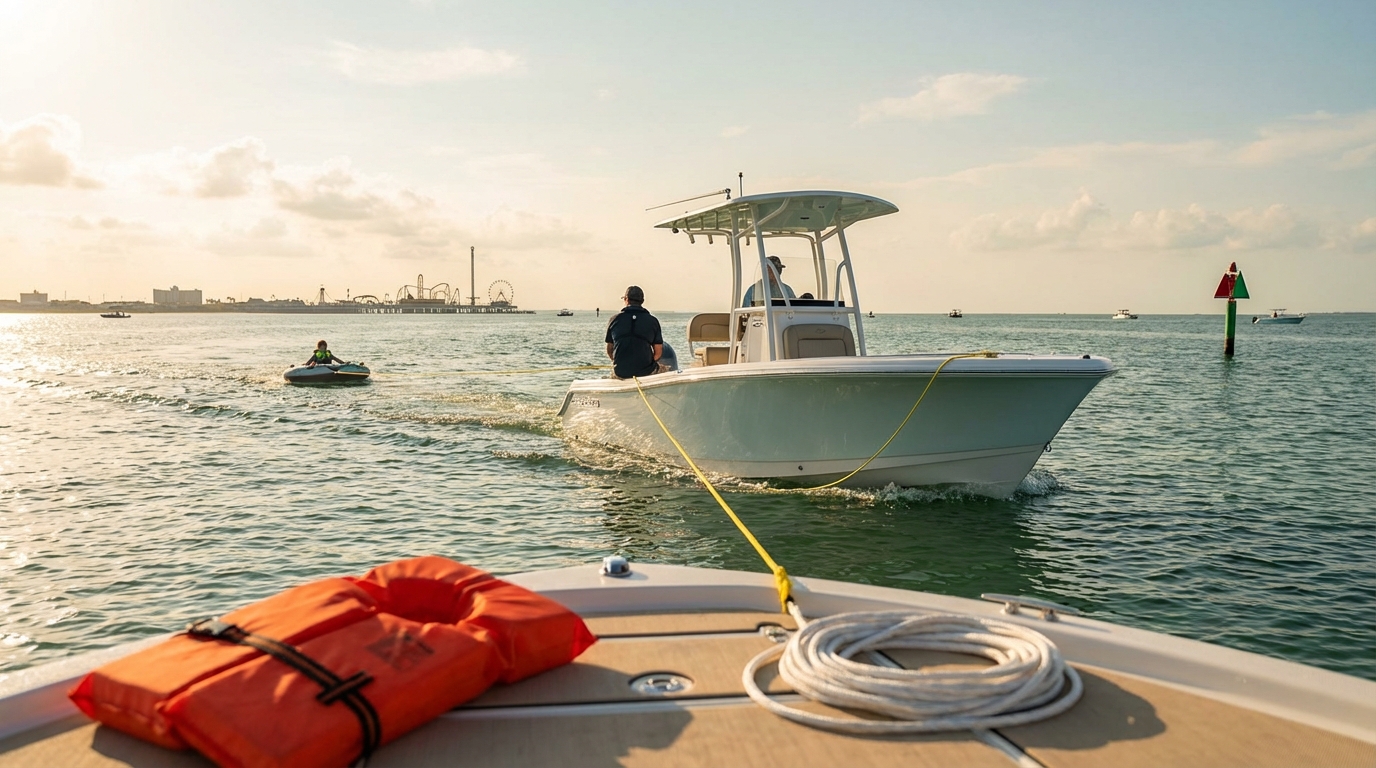
Medical payments coverage (often called MedPay) is usually designed to pay for medical expenses for injuries connected to the insured boat, regardless of fault, up to the MedPay limit. This is why MedPay can be so helpful in tow-sports situations: your friend wipes out wakeboarding, gets checked at urgent care for a shoulder injury, and you want a straightforward way to help with immediate bills without turning the day into a legal argument. MedPay is not the same as liability, and it’s not a replacement for health insurance, but it can reduce friction and keep small injuries from escalating into bigger disputes. In real Galveston scenarios, MedPay can be relevant for passengers who slip on the deck, riders who get rope burn or impact injuries, or someone who gets hurt while re-boarding. The key is that MedPay is typically limited to medical expenses and capped by the policy limit, so it’s best viewed as “first-aid money,” not a full liability solution.
Main Point 3: Common Galveston Tow-Sports Accident Scenarios And Which Coverage Might Respond
A few common tow-sports claim patterns show why both coverages matter. Scenario one: a guest rider gets injured tubing after the driver makes a sharp turn in choppy water. MedPay may help with initial medical bills, while liability could be triggered if the injured person alleges the operator was careless. Scenario two: your rider collides with a dock or another boat after being pulled too close to a no-wake area or congested channel; liability is more likely to be central because there’s property damage and potential third-party injuries. Scenario three: another boat throws a large wake, your rider wipes out, and fingers point in multiple directions; liability claims can get complex, and having clear facts (spotter notes, witness info, photos) matters. The takeaway in Galveston is that tow sports increase both the chance of guest injuries and the chance of third-party disputes, so you want limits and terms that match how you actually use the boat.
Local Relevance: Galveston-Specific Risk Factors, Rules, And Why Waivers Aren’t A Magic Shield
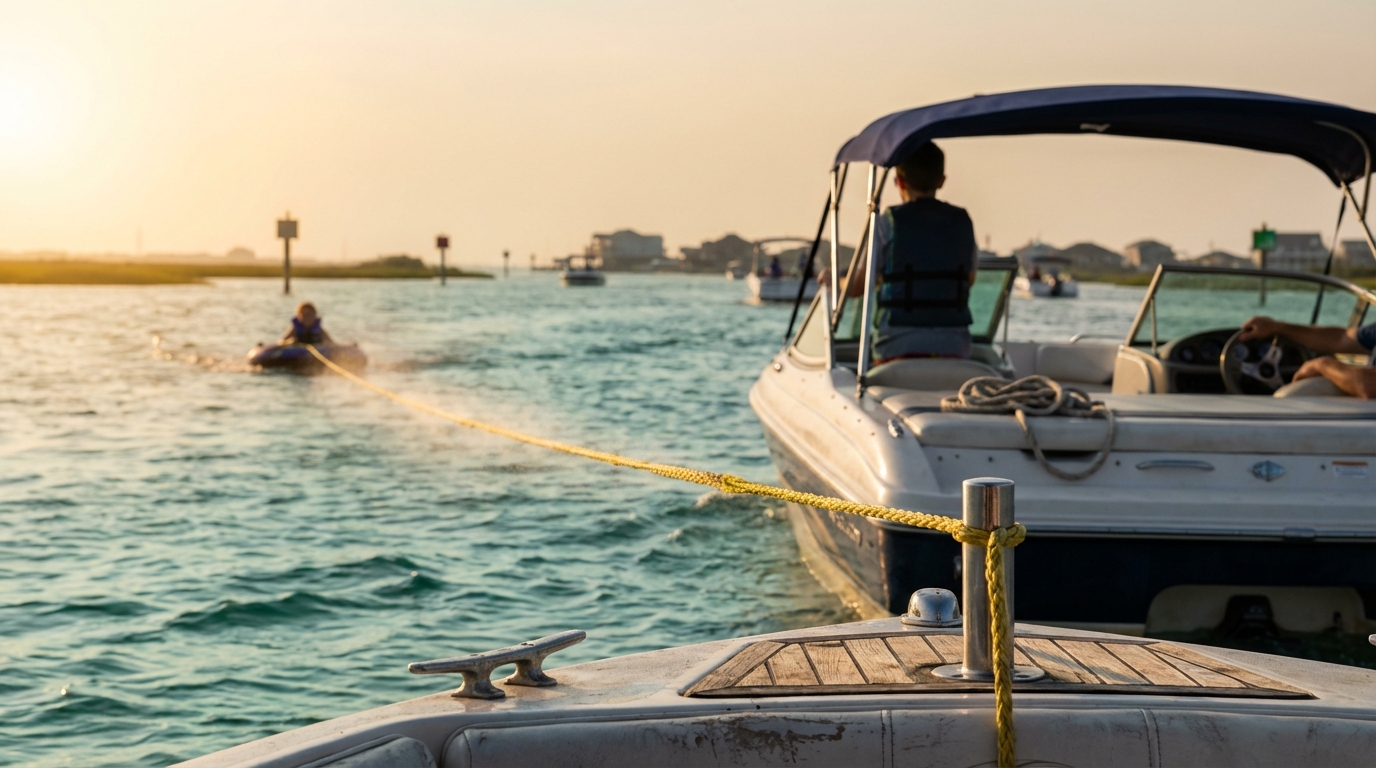
Galveston boating often means variable conditions: wind-driven chop, weekend traffic, and areas where you transition quickly between open water and tighter spaces. Those local realities make operator decisions more important, especially speed control, lookout, and choosing a safe towing lane. Many boaters also ask about waivers. A signed waiver can help set expectations and document that the rider understood risks, but it doesn’t automatically eliminate responsibility if an operator is negligent. In other words, a waiver isn’t a substitute for safe operation, proper supervision, and the right insurance limits. If you regularly tow in and around Galveston and nearby communities like Texas City, League City, Dickinson, La Marque, Santa Fe, Friendswood, or Clear Lake, it’s smart to treat tow sports as a planned activity with a safety checklist, not an afterthought once you’re already on the water.
Key Takeaways For Galveston Tow-Sports Coverage
- Liability coverage is about legal responsibility: it typically applies when you’re accused of causing injury or property damage while towing (speed, turns, lookout, unsafe tow path).
- MedPay is usually no-fault medical help for injuries connected to the boat: it can pay smaller medical bills for guests or riders up to the MedPay limit.
- Third-party claims are common in crowded Galveston waterways: collisions, wake-related incidents, and dock damage often turn into fault-based liability situations.
- Waivers can document risk awareness but don’t replace safe operation: negligence allegations can still lead to liability claims even with a signed waiver.
- Confirm your policy supports towing activities: some policies have specific terms, exclusions, or requirements for watersports and who can operate the boat.

Next Steps: How To Confirm Your Policy Supports Towing And Protects Your Passengers
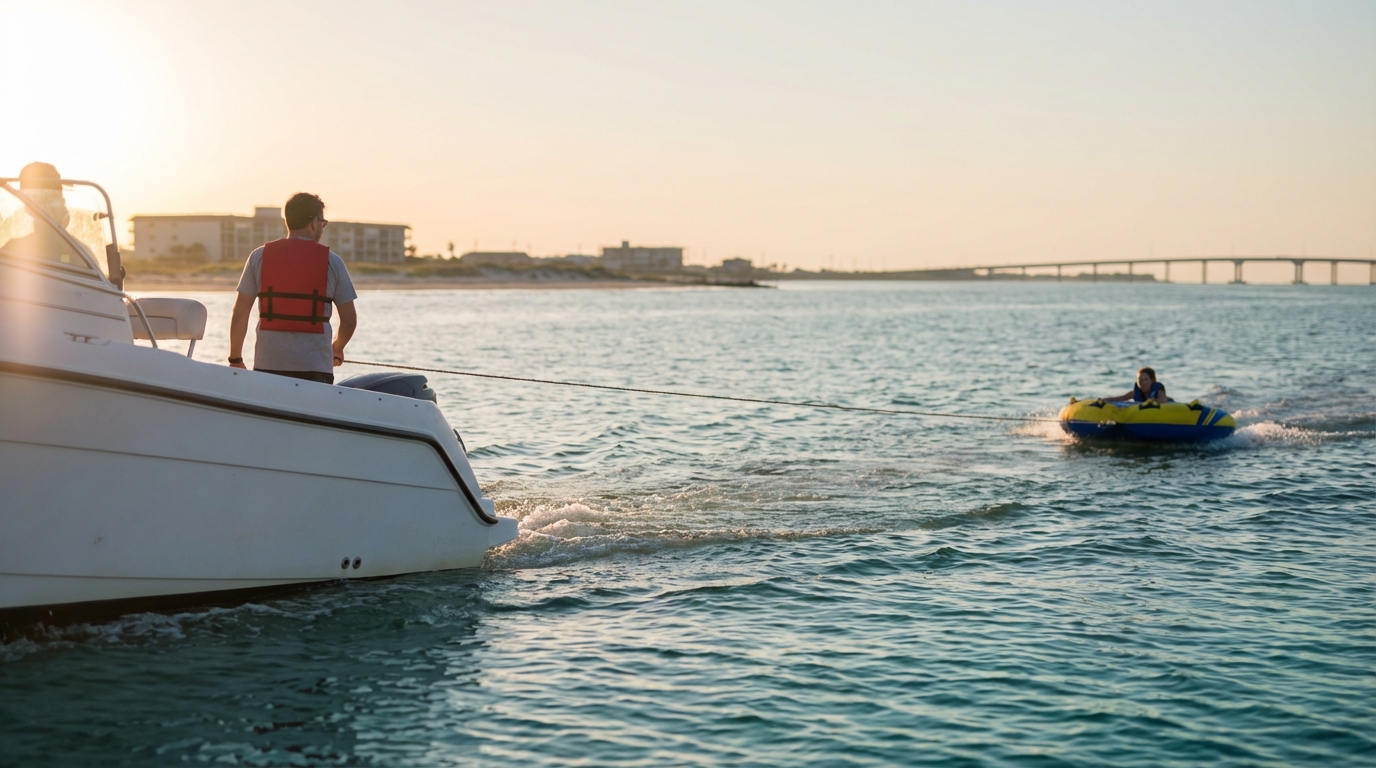
If you tow tubes, skis, or wakeboards in Galveston, the best move is to confirm your coverage before there’s an injury. Start by reviewing your declarations page for liability limits and whether MedPay is included (and at what limit). Then look for any wording about watersports, towing, permitted operators, and whether your policy treats certain activities differently. It’s also worth checking if your policy addresses guest passengers clearly and whether your liability limits match the real cost of injuries today. Finally, consider your on-water habits: do you usually tow with a dedicated spotter, do you avoid congested areas, and do you have a plan for emergency response? The O'Donohoe Agency can help you compare options, explain how liability and MedPay typically apply in tow-sports situations, and tailor a boat insurance quote to how you actually boat around Galveston and nearby communities.
Get A Galveston Boat Insurance Quote Built For Tow Sports
If tubing, wakeboarding, or skiing is part of your weekends, let’s make sure your liability limits and MedPay are aligned with real tow-sports risk. Request a quote and we’ll help you confirm your policy supports towing activities around Galveston, TX.
Get My Quote