

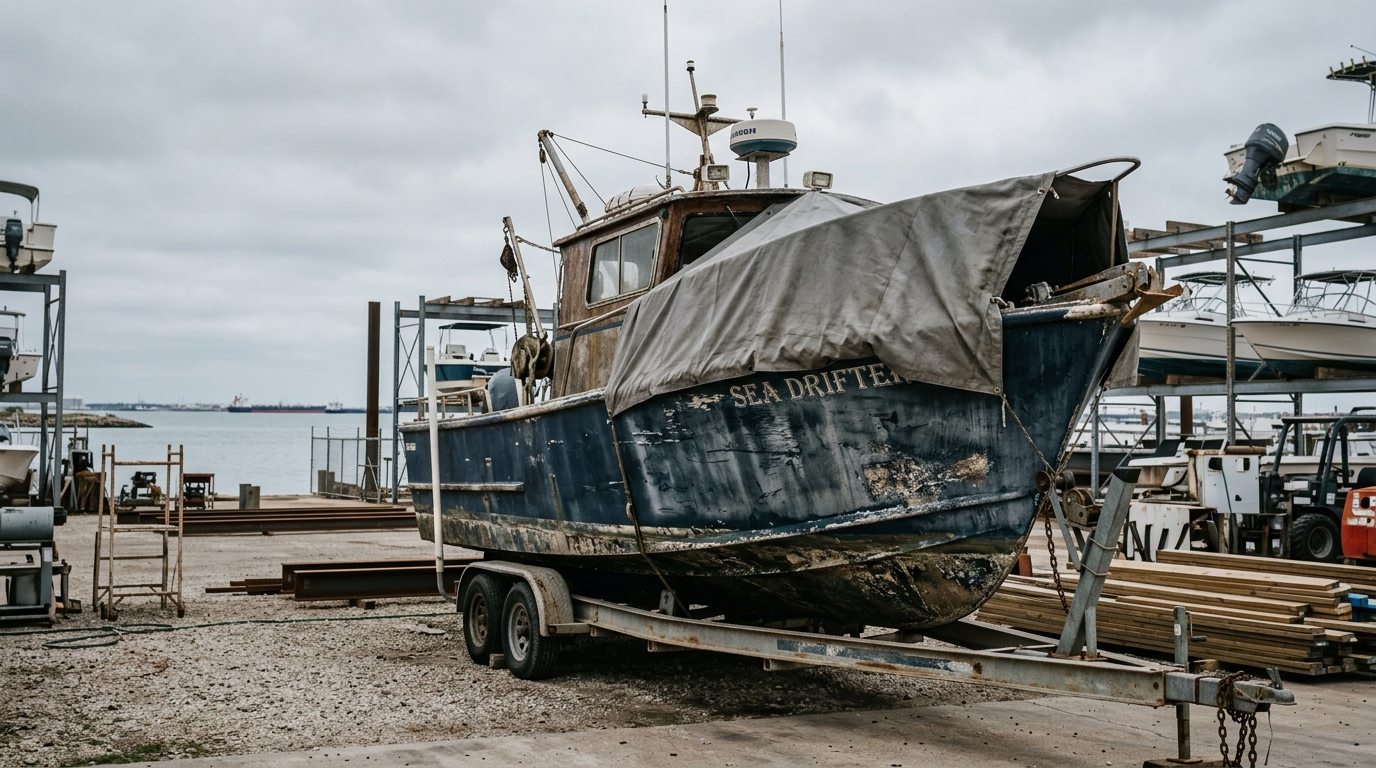
The Silent Threats Lurking Beneath Your Galveston Boat
For boat owners in Galveston, the Gulf waters are both a playground and a persistent adversary. While you're enjoying a day out on the waves or navigating the Galveston Ship Channel, a silent battle is being waged against your boat's hull. We're talking about corrosion and osmotic blistering, two long-term threats that thrive in our warm, salty environment. Many boaters assume their hull coverage will step in when these issues become visible, but the reality is often a costly surprise. Understanding the fundamental difference between sudden, accidental damage and gradual deterioration is the first step in protecting your investment. This knowledge is not just about insurance; it's about preserving the life of your vessel and avoiding the heartbreak of a denied claim when you need help the most.
Sudden vs. Gradual: The Core Principle of Hull Insurance
At its heart, a standard boat insurance policy, including hull coverage, operates on a principle of risk from unforeseen events. It's designed to cover 'sudden and accidental' physical loss or damage. Think of a collision with a submerged log in Galveston Bay, damage from an unexpected grounding on a shifting sandbar near Pelican Island, or the violent impact of a coastal storm. These are the scenarios your policy is built for. Conversely, insurance is not a maintenance contract. Processes like corrosion, electrolysis, and osmotic blistering are considered gradual deterioration, or 'wear and tear.' These are predictable outcomes of a boat's constant exposure to a harsh marine environment, and the responsibility for preventing them falls squarely on the boat owner. This is the line that defines a claim's success or failure.
Understanding Galveston's Unique Corrosion Challenge
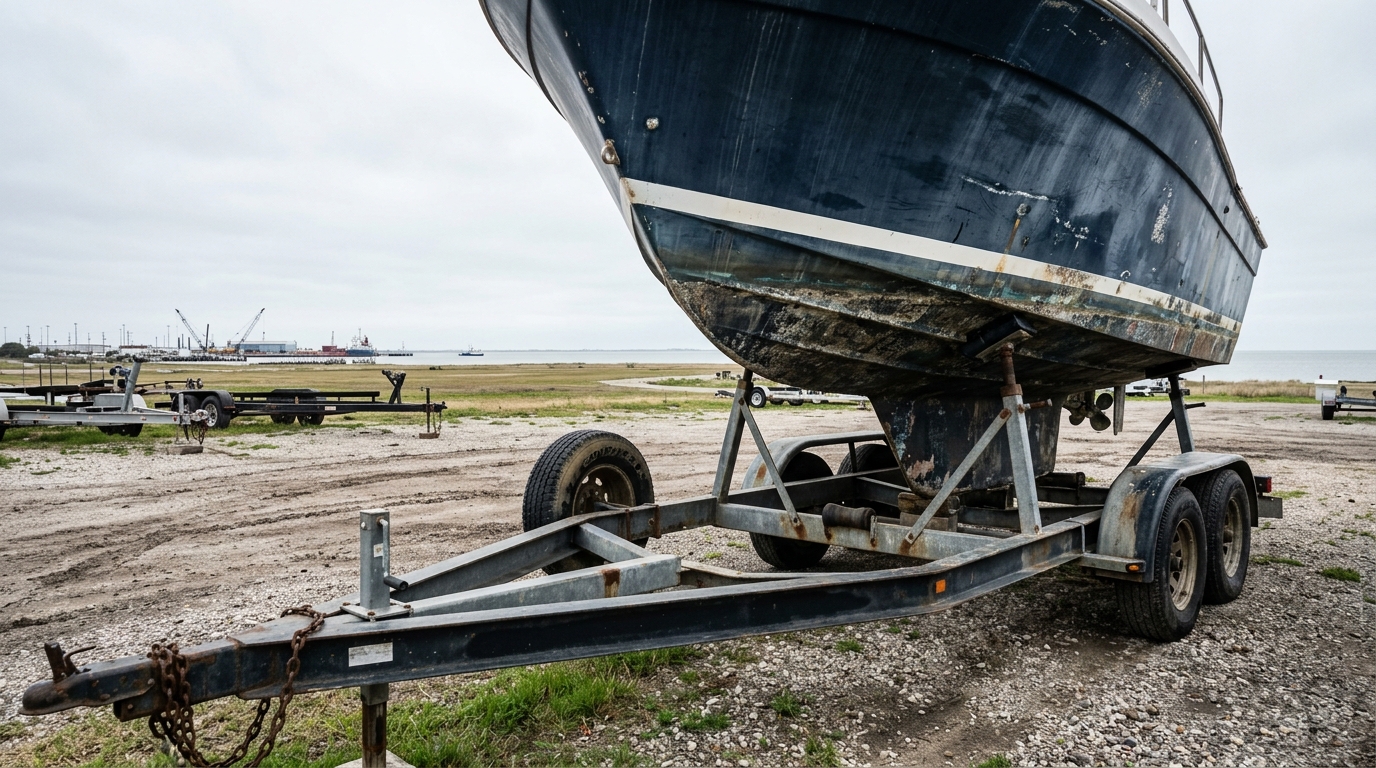
Galveston's water chemistry creates a perfect storm for metal corrosion. The combination of high salinity in the Gulf of Mexico, warm water temperatures that accelerate chemical reactions, and the industrial runoff that can be present in the ship channel makes our local waters exceptionally aggressive on metal components. This isn't just about a little surface rust. Galvanic corrosion, where dissimilar metals in a boat's drivetrain and hull fittings create a weak electrical current, is dramatically sped up. An improperly maintained bonding system or a failing sacrificial anode can lead to severe pitting and weakening of a propeller shaft, rudder, or even an aluminum hull in a shockingly short time. An insurance adjuster will almost always classify this as a lack of proper maintenance, leaving you with a repair bill that can easily climb into the thousands of dollars.
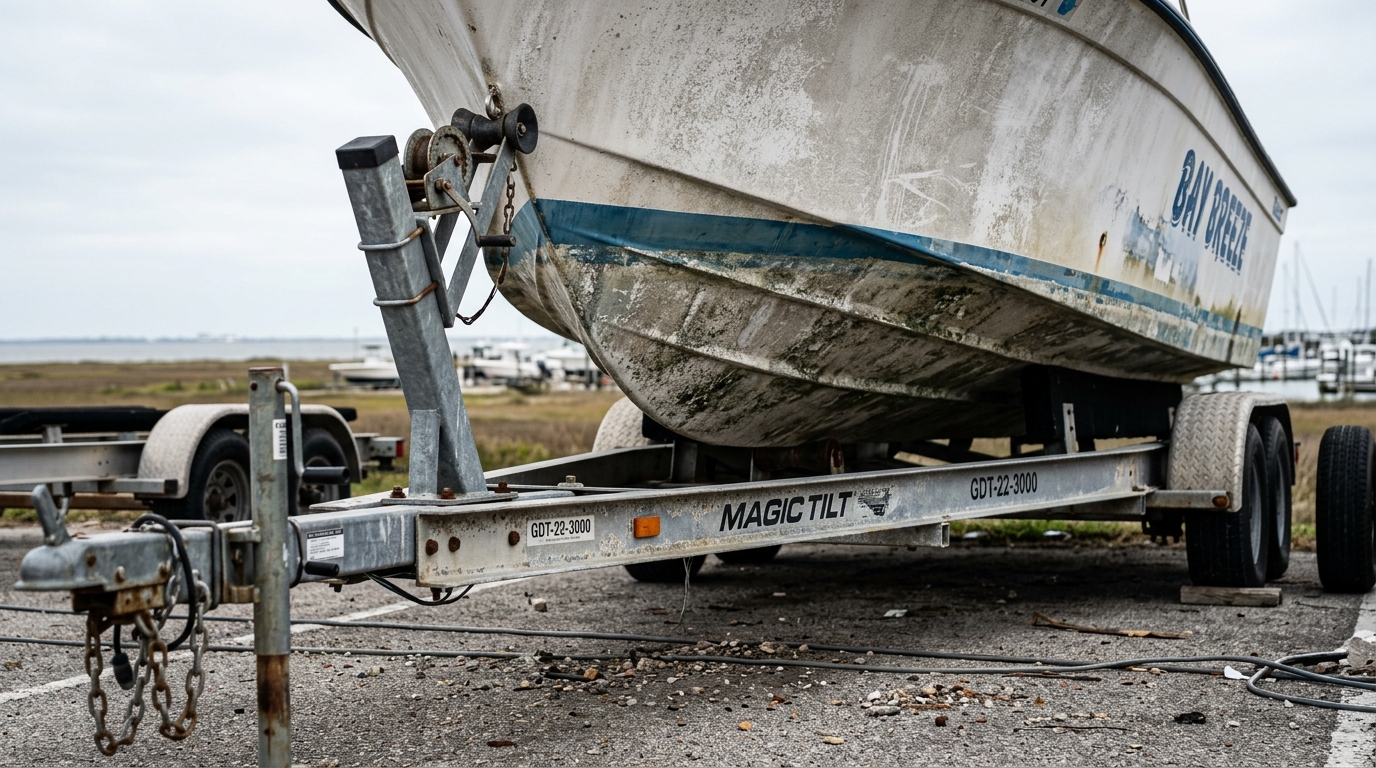
Osmotic Blistering: The Fiberglass Hull's Disease
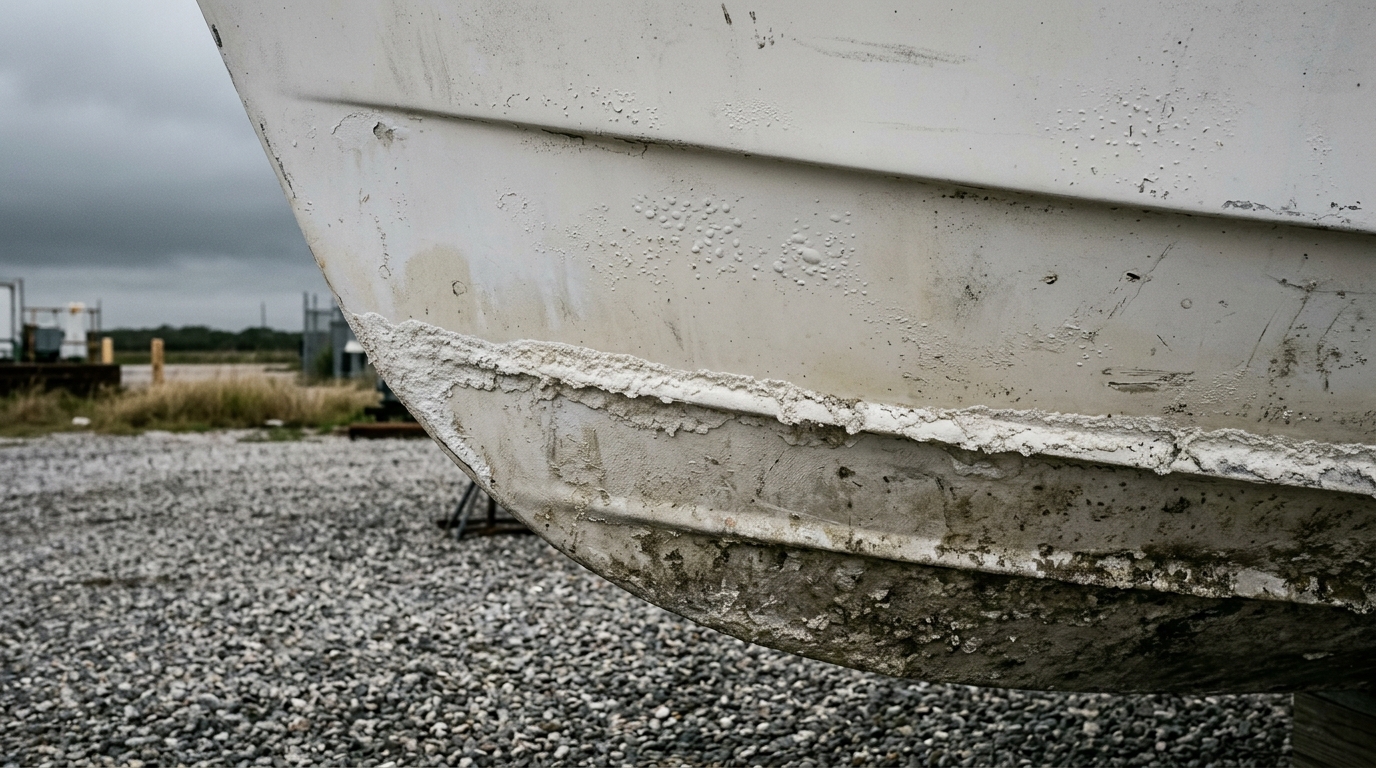
While metal boats fight corrosion, fiberglass hulls face their own nemesis: osmotic blistering, often called 'boat pox.' This condition occurs when water molecules are absorbed through the gel coat and react with unbound chemicals in the laminate, forming acidic blisters under the surface. In the consistently warm waters of marinas like those in Clear Lake, League City, and Dickinson, this process is relentless. A hull that sits unprotected for years will almost certainly develop some degree of blistering. When a boat owner discovers a bottom full of blisters during a routine haul-out at a Texas City boatyard, their first thought might be an insurance claim. However, like corrosion, this is universally viewed as a progressive maintenance issue. The claim will be denied because the damage is the result of a slow, predictable chemical process, not a single, identifiable accident.
When a Maintenance Issue Can Become a Covered Claim
There is a crucial exception to the 'maintenance is not covered' rule. If a long-term, neglected issue directly causes a sudden and accidental event, the resulting damage may be covered, though the original defect will not be. For example, a severely corroded through-hull fitting that has been ignored for years finally fails catastrophically, causing the boat to sink at its slip in La Marque. The insurance policy will likely cover the cost of raising the boat, cleaning up the environmental hazard, and repairing the interior water damage. However, the cost of replacing that corroded fitting itself—the root cause—would be your responsibility. The key is that a sudden, consequential loss has occurred that is separate from the original maintenance failure. Proving this chain of events requires a skilled marine surveyor and a detailed claims report.
A Proactive Maintenance Regimen for Galveston Boaters
The best defense against a denied claim and an expensive repair bill is a rigorous, documented maintenance schedule tailored to our local environment. First, make sacrificial anodes your best friend. Inspect them every time the boat is hauled and replace them when they are half-depleted, not just when they're gone. For boats kept in the especially hot marinas of Santa Fe or Friendswood, a more frequent replacement schedule is wise. Second, invest in a professional hull survey every two to three years, even if your insurer doesn't require it. A surveyor can detect early-stage blistering, moisture intrusion, and electrical issues before they become catastrophic. Finally, keep a detailed logbook of every inspection, anode replacement, bottom paint job, and repair. This documentation is your most powerful evidence to show an adjuster that you have been a responsible steward of your vessel.
Key Takeaways for Protecting Your Galveston Hull
Proactive Steps to Prevent Damage and Denied Claims
- Understand your policy's explicit exclusion for 'wear, tear, and gradual deterioration' to avoid an unwelcome surprise.
- Create a strict maintenance calendar for inspecting anodes, bonding systems, and hull coatings, and log everything.
- Schedule professional hull surveys every 2-3 years to catch moisture and corrosion issues in their earliest, most manageable stages.
- Recognize that while the source of a problem isn't covered, the sudden and accidental catastrophic damage it causes may be.

Your Local Partner in Navigating Marine Insurance
Deciphering the fine print of a marine insurance policy can be as tricky as navigating a foggy Galveston channel. At The O'Donohoe Agency, we're not just insurance agents; we're members of the local boating community. We understand the specific challenges posed by our Gulf Coast waters, from the aggressive corrosion in the ship channel to the blistering issues common in our back bays and marinas. We can help you review your current hull coverage, explain exactly where your maintenance responsibilities end and your policy's protection begins, and ensure you have the right coverage for the true risks we face here. Don't wait until you're facing a denied claim to discover a gap in your understanding. Reach out to us today, and let's create a plan that keeps you confidently on the water.
