

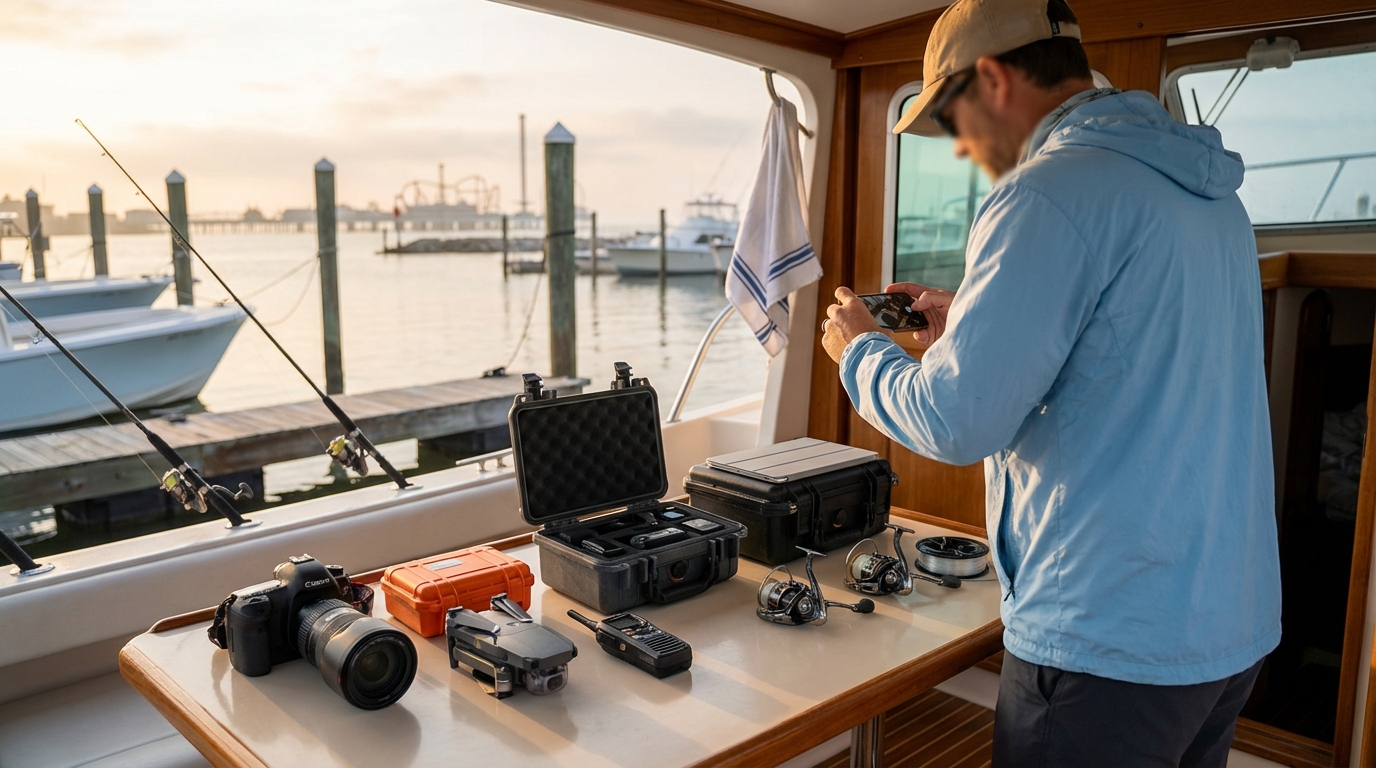
Why Documenting Boat Gear Matters in Galveston
If you boat out of Galveston, you already know how quickly “a few accessories” turns into thousands of dollars in gear—chartplotters, handheld GPS units, drones, camera bodies and lenses, rods and reels, tackle, and even specialty coolers. The problem is that personal effects coverage is only as good as your ability to prove what you owned and what it was worth. After theft at a marina, a break-in at a launch ramp, or water damage from a rough day on the bay, documentation is what turns a stressful claim into a straightforward one. This article walks you through a simple system you can set up in an afternoon and maintain all season.
How Insurers Typically Evaluate Value (And Where People Get Surprised)
Most insurance claims come down to three questions: what item was it, what condition was it in, and how do we determine its value. Many policies lean toward actual cash value for personal property unless you’ve selected replacement cost or scheduled specific items, so depreciation can matter for electronics and camera gear. Another common surprise is sub-limits: a policy might cover personal effects, but cap certain categories like electronics, fishing gear, or jewelry unless you increase limits or schedule items. Finally, “proof of ownership” isn’t just a receipt—insurers like to see a trail that connects the item to you: serial numbers, photos showing the item in your possession, and purchase records. Knowing these basics helps Galveston boaters avoid the painful scenario of having coverage on paper but not enough documentation to support the value.
Step 1: Build a Gear Inventory That Matches Real Life on the Water
Start with a list that reflects how you actually use your boat around Galveston—bay fishing, offshore runs, photography, or weekend cruising. Create categories: navigation/electronics (MFDs, radios, PLBs), camera gear (bodies, lenses, drones), fishing gear (rods, reels, tackle boxes), and “high-theft, easy-carry” items (binoculars, Yeti-style coolers, portable speakers). For each item, record brand, model, serial number, purchase date, and what you paid. Add where it’s usually stored (console, cabin, truck, home) because that can matter when a loss happens off the boat. If you routinely move gear between Galveston, Clear Lake, and League City, note that too—mobility is exactly why a clear inventory pays off.
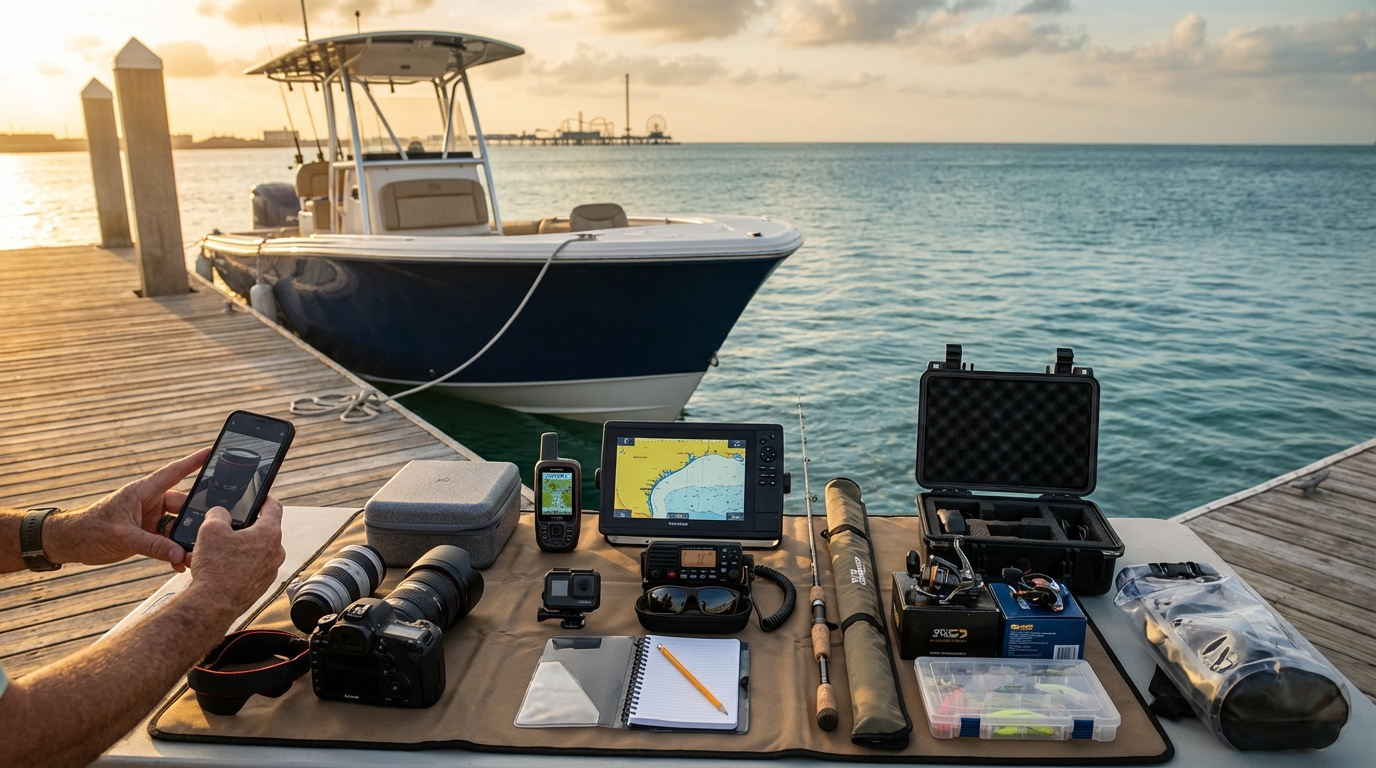
Step 2: Take Photos and Video Like an Adjuster Will Read Them
Photos are the fastest way to prove ownership, but only if they show identifying details. For each high-value item, take a wide shot (item in context on the boat) and a close-up of the model label or serial number. For rods and reels, photograph the reel model plate and any custom components. For cameras, shoot the body serial number and each lens serial number; for drones, capture the aircraft serial and controller serial. A short walkthrough video is also helpful—open hatches, show storage compartments, and narrate what you’re filming. In Galveston, where salt air and spray are part of normal wear, a dated set of photos can also establish pre-loss condition. Store the media in a single folder by year so you can update it at the start of each season.
Step 3: Gather Receipts, Proof of Payment, and Appraisals for the Big Stuff
Receipts are ideal, but don’t stop there. If you bought gear online, save the order confirmation and the payment record (credit card statement line item or digital wallet receipt). For used purchases common around Texas City and Dickinson—Facebook Marketplace, marina bulletin boards, or buddy-to-buddy sales—create your own paper trail: a simple bill of sale with date, seller name, item description, serial number, and price. For custom rods, high-end reels, or professional camera kits, an appraisal or written valuation from a reputable shop can help support value, especially if the item is rare or heavily customized. When in doubt, document the replacement cost today, not just what you paid years ago, because pricing for electronics and specialty gear can move quickly.
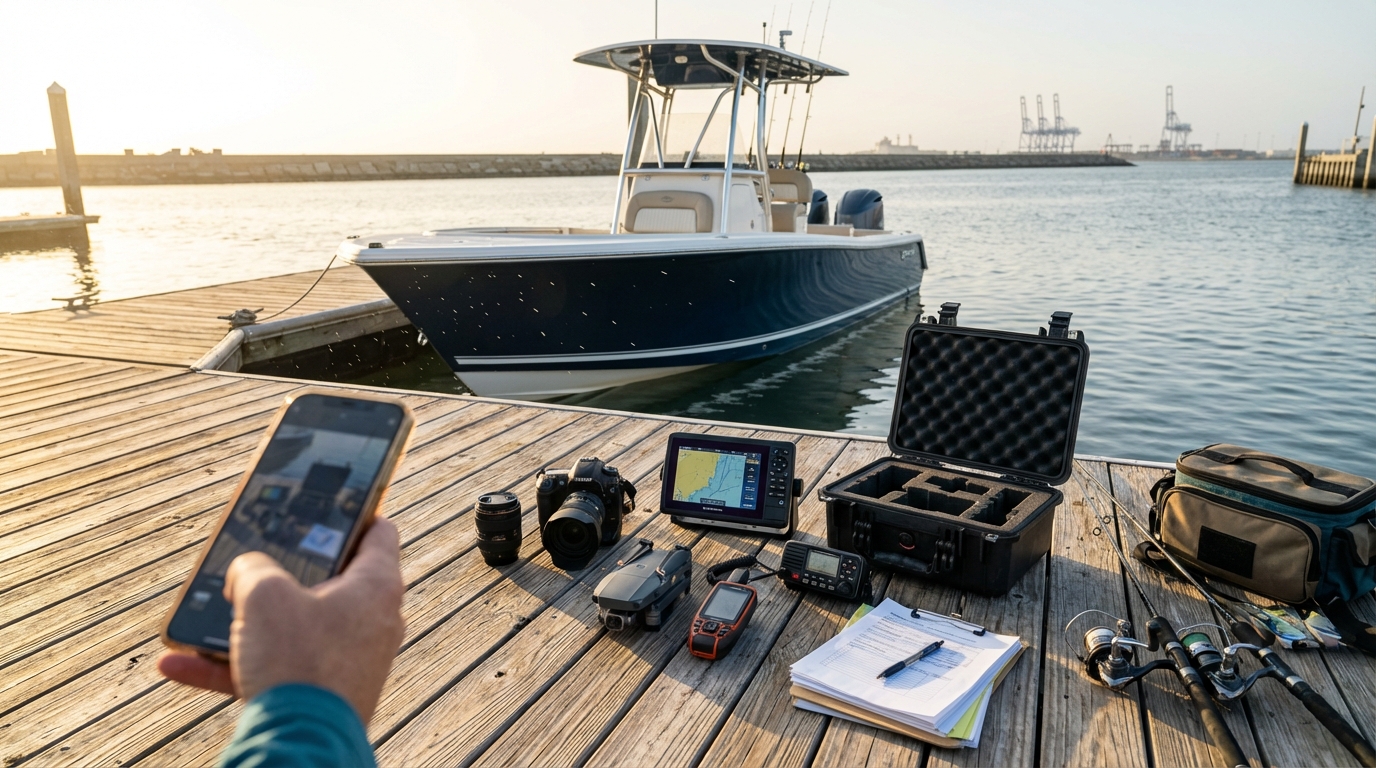
When to Increase Limits vs. Schedule Items (A Simple Decision Rule)
A practical rule: increase your blanket personal effects limit when you have lots of mid-range items, and schedule items when a few pieces would blow past a sub-limit or would be painful to depreciate. For example, if you carry several rods and reels that are each $300–$700, a higher overall limit may be enough. But if you have a $3,000 camera body, a $2,000 lens, a premium drone, or a tournament-grade electronics package, scheduling can lock in agreed terms and reduce arguments about depreciation or category caps. Scheduling also helps when gear is frequently off the boat—like a camera kit that goes from your Galveston home to the dock to the beach. The best approach is to total your “worst-day loss” (everything stolen at once) and compare it to your policy’s limits and any category restrictions.
Local Relevance: Galveston Risks That Make Documentation Especially Important
Galveston boating comes with real-world loss scenarios: gear left in a truck at a launch, theft from marina parking areas, sudden squalls that soak electronics, and saltwater corrosion that turns a minor incident into a full replacement. Add in busy weekends and traveling between Galveston and nearby areas like La Marque, Santa Fe, Friendswood, and Clear Lake, and it’s easy for gear to be “in transit” when something happens. Documentation helps clarify where the item was, what it was used for, and what it would cost to replace quickly so you can get back on the water. It also helps if you’ve upgraded over time—swapping a basic fish finder for a newer unit—because old receipts alone may not reflect what’s actually on your boat today.
Key Takeaways: A Fast Documentation Checklist
- Create a one-page inventory with brand/model/serial number, purchase date, and storage location for each high-value item.
- Photograph each item twice: a wide “on the boat” shot and a close-up of the serial/model label; add a yearly walkthrough video.
- Save receipts plus proof of payment; for used purchases, write a bill of sale that includes the serial number.
- For custom or high-end gear, get an appraisal or written valuation so replacement cost is easier to justify.
- Compare your worst-day loss total to your personal effects limit and any category sub-limits; schedule items that exceed caps or depreciate heavily.

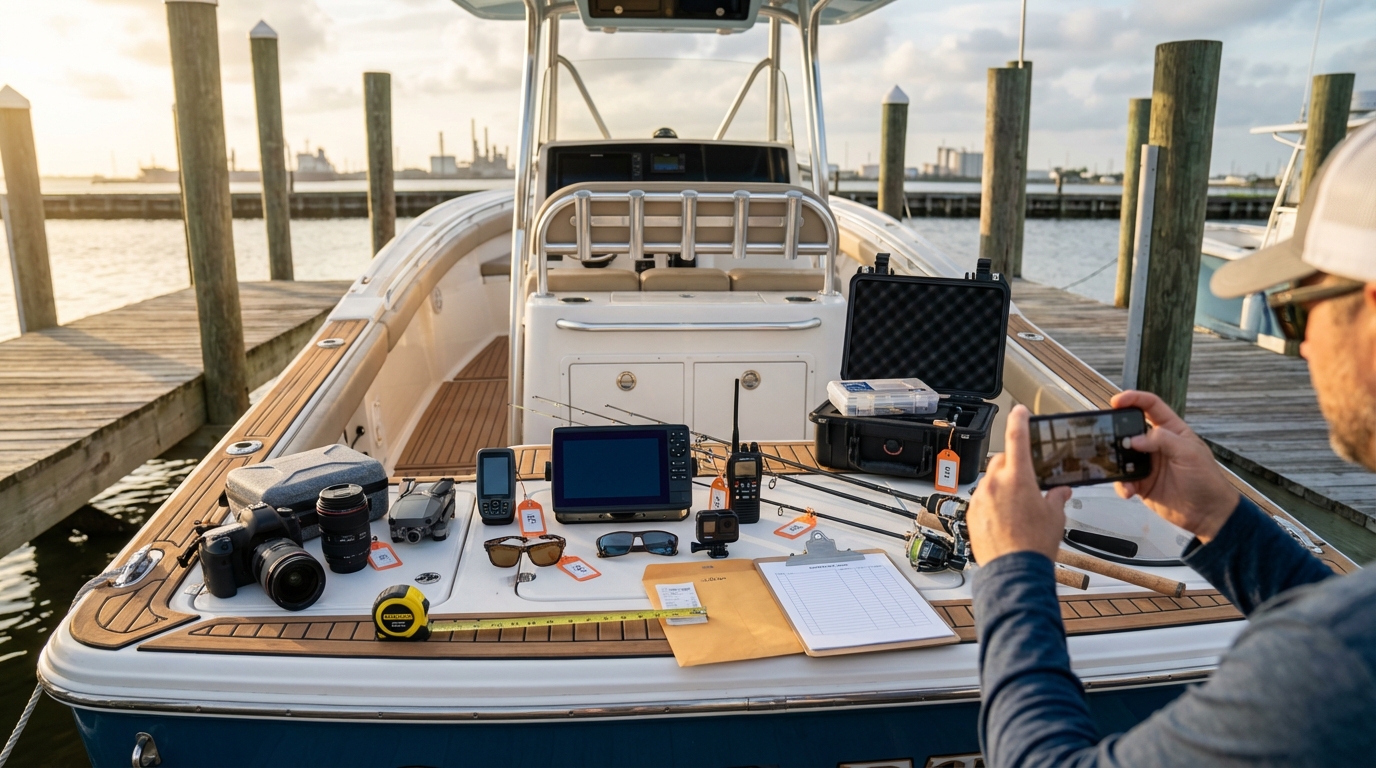
Next Steps: Put Your Documentation to Work Before You Need a Claim
Once your inventory and photos are done, the next step is making sure your policy matches the reality of what you carry in and around Galveston. Review your personal effects limit, ask whether coverage is replacement cost or actual cash value, and confirm whether there are category sub-limits for electronics or fishing gear. If you’re unsure, bring your inventory totals and a few examples of your highest-value items (with serial numbers and receipts) and we can quickly spot gaps. The O'Donohoe Agency works with Galveston boaters who keep serious gear onboard, and we can help you decide whether a higher blanket limit, scheduled items, or both makes the most sense for your setup and budget. A little preparation now can save weeks of back-and-forth later.
Review Your Personal Effects Coverage for High-Value Gear
Want a quick coverage check for cameras, electronics, and fishing gear on your boat in Galveston? Share your inventory totals and we’ll help you set limits that make sense.
Get My Quote