

Why Tow Bills Get So Expensive Around Galveston
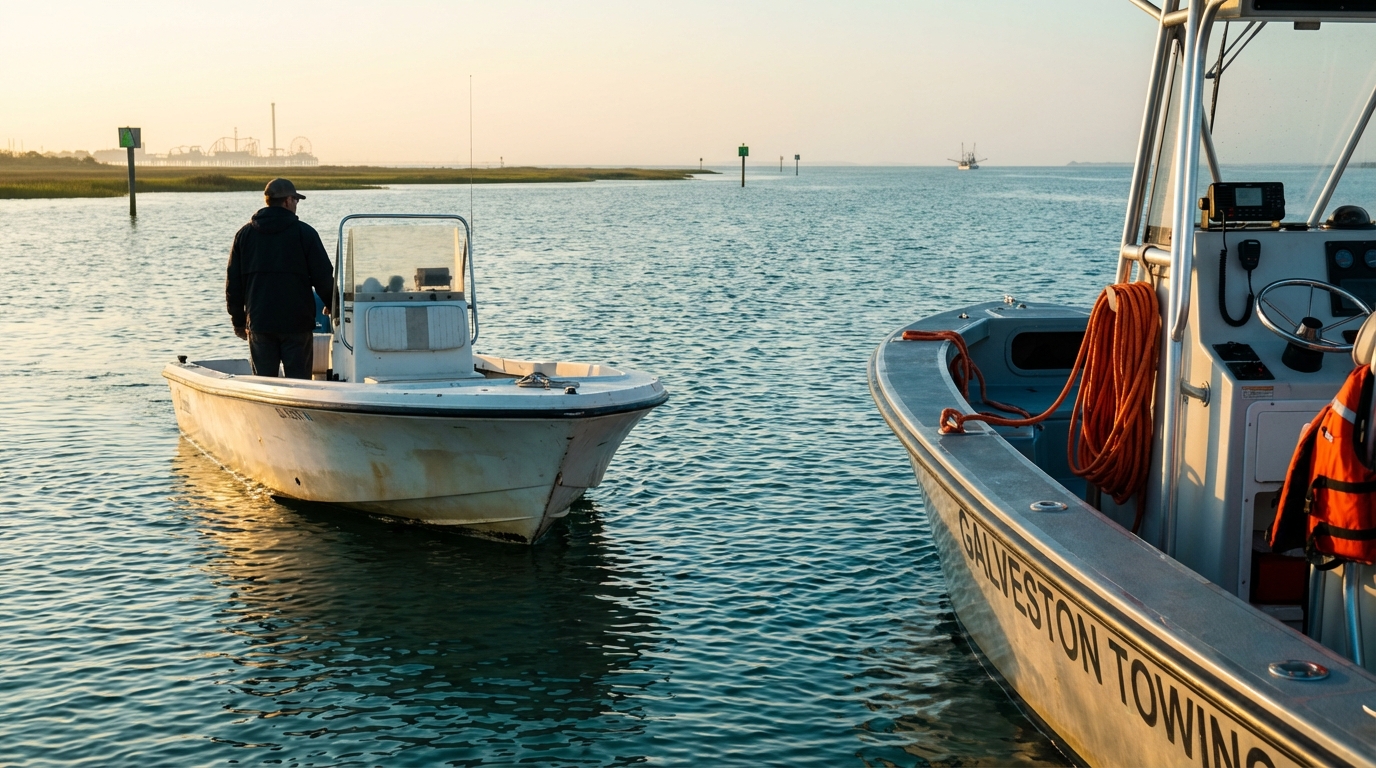
A tow on the road is annoying, but a tow on the water around Galveston can be a budget-buster. Distances are bigger than they look, conditions change quickly, and you may be dealing with currents, wind, or limited safe places to tie up. A dead battery near the jetties, a clogged fuel filter in West Bay, or an overheated engine after a long run can turn into a professional tow that costs far more than most boaters expect. The good news is that expensive tows are often preventable, and the right towing and assistance coverage can keep a bad day from becoming a financial headache.
What “Towing And Assistance” Usually Means In Boat Insurance
Boat policies often include or offer towing and assistance coverage, but the details matter. In plain language, this coverage is meant to pay for on-water towing, soft ungrounding, jump starts, fuel delivery, or minor help to get you back to a dock or a repair facility. The most common surprise is the limit: some policies pay up to a set dollar amount per incident, others have an annual cap, and some require you to use approved providers. Another key detail is whether the situation is considered an emergency salvage versus routine towing. Knowing how your policy draws that line is important in Galveston, where conditions can shift from “inconvenient” to “unsafe” quickly.
Main Tow Triggers In Galveston (And How To Reduce Them)
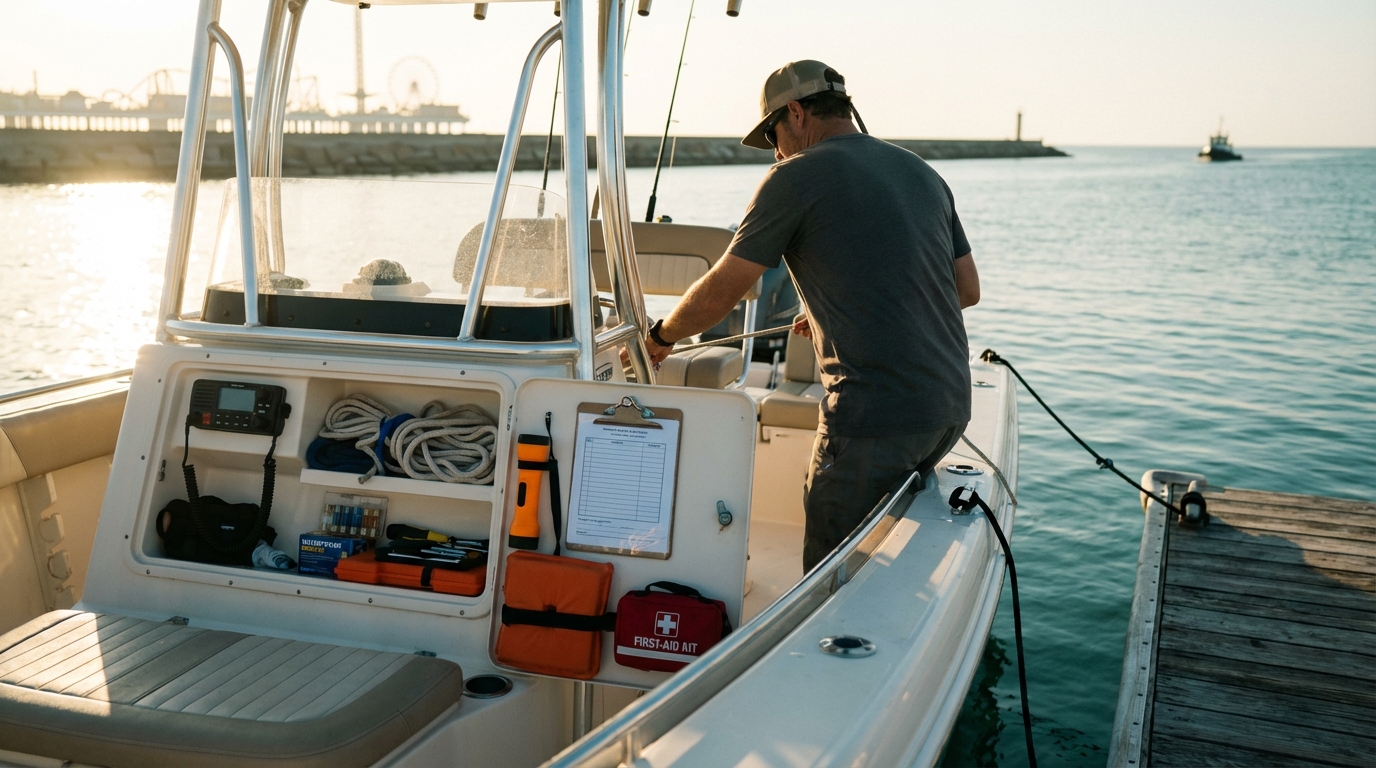
Most tow calls aren’t dramatic storms; they’re preventable mechanical or planning issues. In Galveston, common triggers include fuel miscalculations on longer runs across the Bay, battery failures after anchoring with electronics running, and cooling issues from intake blockages or maintenance that slipped. Start with a simple pre-departure routine: check fuel level and burn rate, verify the bilge is dry, confirm the engine starts cleanly, and test steering and throttle response at the dock. If you trailer to different launch points, add a quick walkaround for loose clamps, lines near the prop, and any new leaks. These small checks reduce the odds you’ll need a tow at the worst possible place.
Fuel Planning, Float Plans, And Route Choices That Prevent Tow Calls
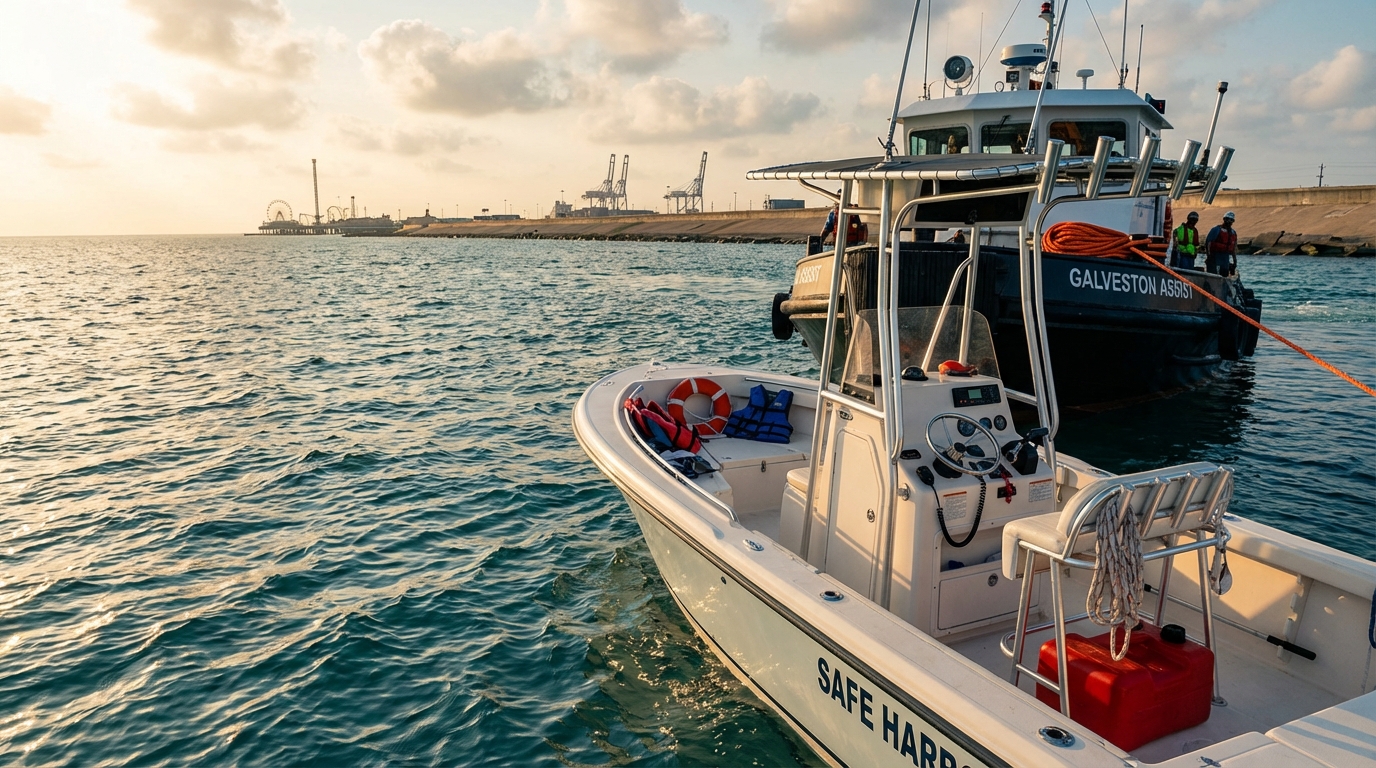
Fuel planning is one of the easiest ways to avoid a costly tow. A practical rule is to plan conservatively: keep a buffer for unexpected headwinds, detours, or time spent idling around docks and no-wake zones. Track your typical gallons-per-hour at cruise speed and remember that rougher water can increase burn. Pair that with a float plan, even if it’s informal: tell a friend where you’re launching in Galveston, your intended route, when you expect to return, and who to call if you’re overdue. Also think about route choices. Staying within a reasonable run of a safe harbor, marina, or ramp reduces tow distance if something fails.
Battery Redundancy, VHF Use, And The Gear That Pays For Itself
Electrical issues are a top reason boaters call for help, and they’re also one of the easiest to plan around. If your setup allows it, consider a dual-battery system with a selector switch or an automatic charging relay, so you can keep a true reserve battery. Carry a basic jump pack rated for marine use and keep terminals clean and tight. Communication matters too: a VHF radio is often more reliable than a phone on the water, especially when you’re farther out or conditions are noisy. Know how to give your location using landmarks, channel markers, or GPS coordinates. In a tow scenario, clear location details can reduce response time and total cost.
Maintenance Habits That Cut Breakdown Risk In Saltwater Conditions
Galveston’s saltwater environment is tough on boats, and small maintenance lapses can show up as breakdowns at the wrong time. After each trip, flushing the engine (when applicable), rinsing hardware, and checking for corrosion helps prevent cooling and electrical problems. Keep an eye on the basics that commonly lead to tows: battery age and charge health, fuel-water separators, impellers, belts, and hose clamps. If you notice hard starts, sputtering at higher RPM, or overheating alarms, treat those as early warnings rather than “we’ll see if it happens again.” Preventive service costs far less than a tow plus a rushed repair, especially during busy boating months.
Local Realities: Galveston Bay, Jetties, And Busy Weekends
Local conditions around Galveston can amplify towing costs. Wind and tide can push you into shallow areas or make holding position difficult if you lose power. Traffic increases on weekends and during events, and that can limit where you can safely drift or anchor while waiting for assistance. Areas near the jetties and passes can be especially unforgiving when currents pick up, and a minor issue can become a safety concern quickly. If you boat near Texas City, League City, Dickinson, La Marque, Santa Fe, Friendswood, or Clear Lake, plan for different run distances and marina access points. The more you tailor your plan to local water and traffic patterns, the fewer surprises you’ll face.
Key Takeaways To Reduce Tow Frequency And Control Costs
- Know your towing and assistance limit: Confirm whether it’s per-incident or annual, and whether provider restrictions apply before you need help.
- Use a simple float plan every trip: Launch point, route, passenger count, and return time make it easier to get help fast if something goes wrong.
- Plan fuel with a real buffer: Track burn rate and account for rough water, detours, and idle time in no-wake zones around Galveston.
- Build electrical redundancy: Dual batteries, clean terminals, and a marine-rated jump option prevent the most common “won’t start” tow calls.
- Communicate clearly with VHF: Practice giving GPS coordinates or marker references so the tow operator can find you quickly.
- Treat maintenance warnings early: Overheat alarms, fuel sputter, and hard starts are often the last stop before a tow bill.

What To Document So Towing Claims Go Smoothly
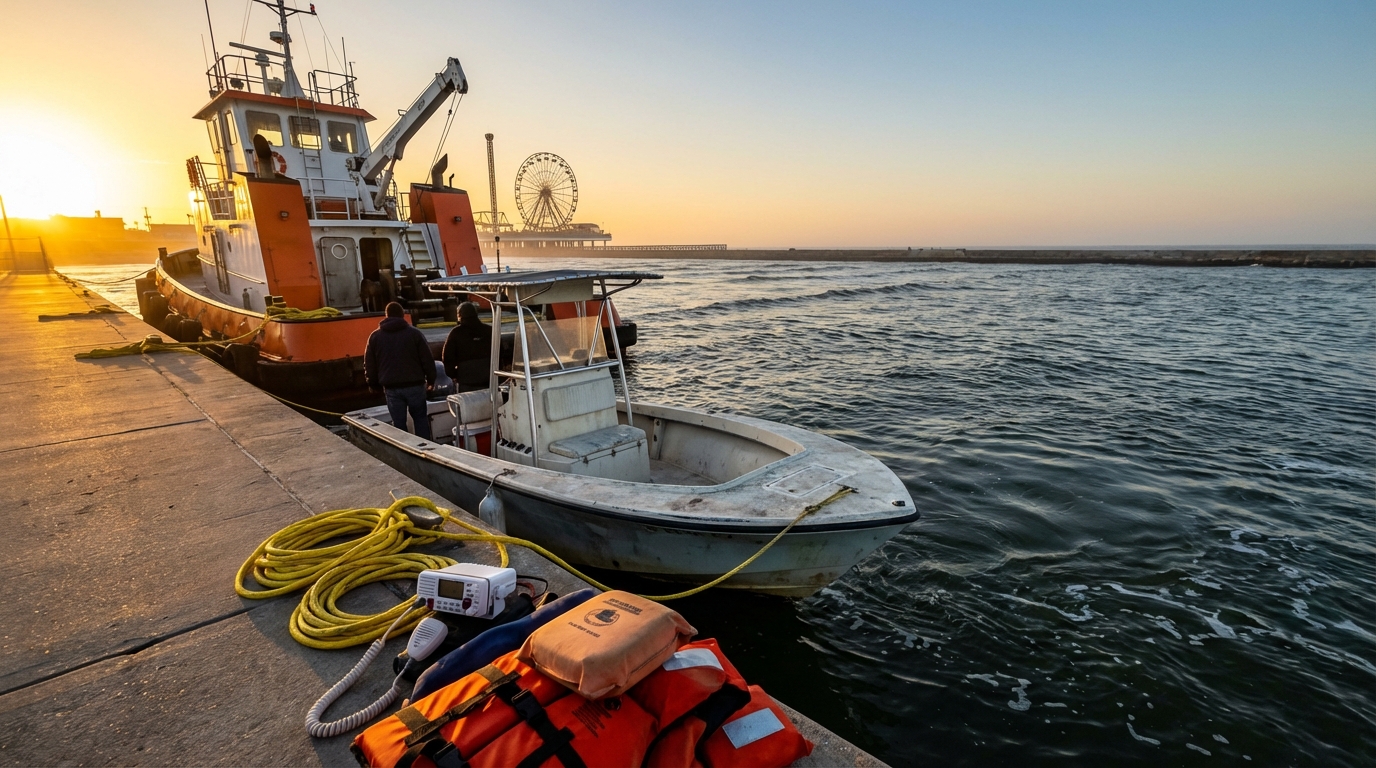
If you do need a tow, good documentation can help the claim process go faster and reduce back-and-forth. Start by saving the tow operator’s invoice and noting the date, time, and exact location where assistance began and ended. Write down what happened in plain language, like “engine overheated and shut down” or “battery would not crank after anchoring,” and take a few photos if it’s safe to do so. If your policy requires prior authorization or a specific contact method, follow that process and keep screenshots of any call logs or messages. Also keep your boat registration, policy number, and contact details accessible on the boat so you’re not scrambling when you’re already stressed.
Next Steps: Match Your Coverage To How You Boat In Galveston
The best way to avoid expensive tow bills is a two-part approach: reduce the chance you’ll need a tow, and make sure your policy is built for the way you use your boat around Galveston. If you routinely run longer distances, fish early mornings, anchor with electronics on, or boat in shoulder seasons when weather swings are common, you may want higher towing and assistance limits and clear guidance on how claims are handled. The O'Donohoe Agency can help you compare towing options, explain how limits and exclusions typically work, and align your boat insurance with your real routes and habits in Galveston and nearby areas like Clear Lake and Texas City.
Review Your Towing Coverage Before You Need It
Get a quick review of towing and assistance limits, plus coverage options that fit how and where you boat around Galveston.
Get My Quote