

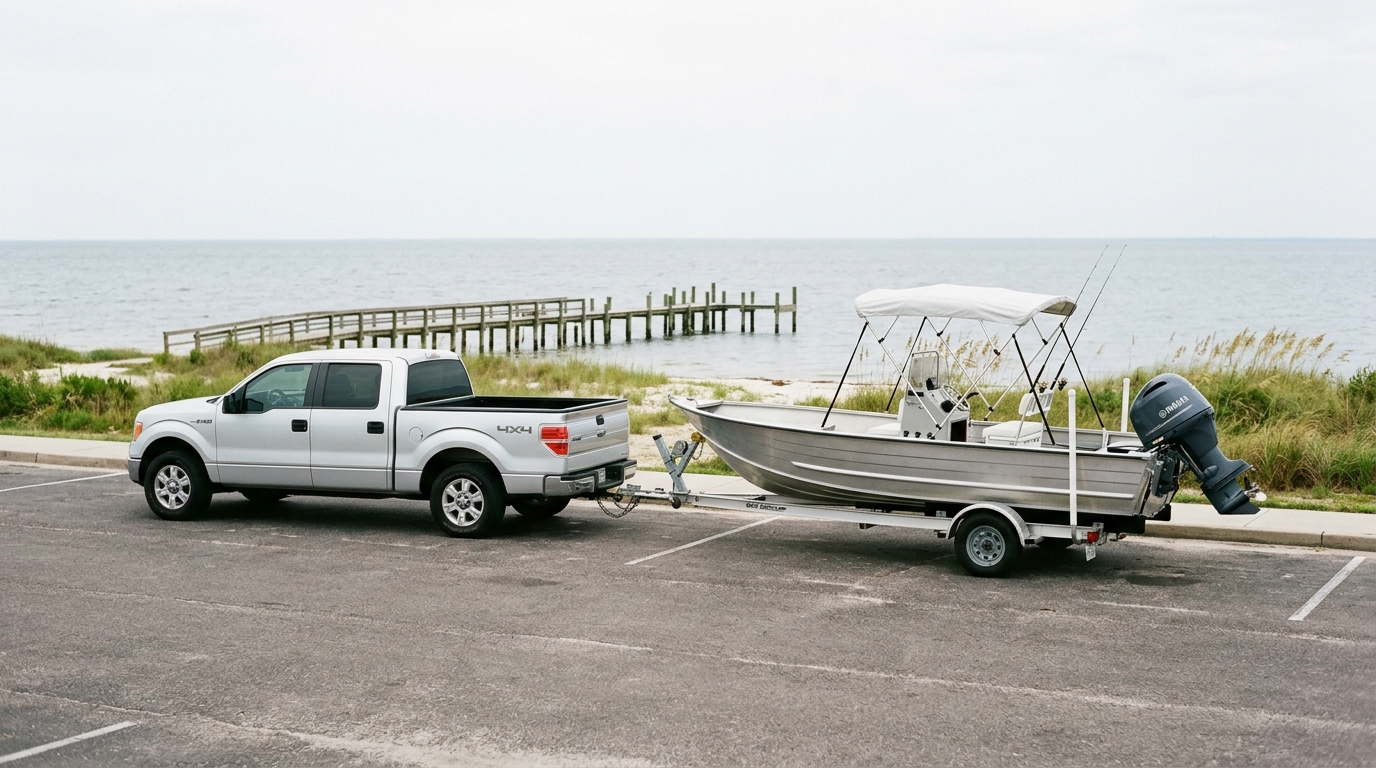
Why a Galveston Trailer Check is Non-Negotiable
The excitement of a day on the water can quickly evaporate on the side of I-45 if your trailer fails. In Galveston, we don't just battle potholes and traffic; our trailers face a relentless assault from a humid, salt-laden atmosphere that accelerates wear and tear like nowhere else. A simple trip to the Galveston Yacht Basin or a launch at the Seawolf Park ramp can turn into a costly disaster without proper preparation. This checklist isn't just about avoiding a ticket for a blown taillight. It's a comprehensive walkthrough to ensure your trailer is mechanically sound and that your insurance coverage actually protects you from the specific breakdowns and accidents that happen most often right here along the Texas Gulf Coast.
The Silent Killer: Confronting Galveston's Corrosive Environment
The greatest threat to your trailer in Galveston isn't mileage; it's corrosion. The combination of warm Gulf water, high humidity, and salt spray creates a perfect storm for rust and electrical gremlins. Unlike freshwater boating, every dunk at a Galveston ramp introduces highly conductive saltwater to your trailer's wiring, bearings, and frame. This often manifests as mysterious light failures—a common sight on Harborside Drive on a Saturday morning. The corrosion attacks from the inside out, meaning a frame that looks solid might be dangerously thin. A thorough freshwater rinse after every single saltwater launch, targeting the springs, brake assemblies, and all electrical connections, is the single most effective habit you can adopt to extend the life of your trailer in this environment.
Tires and Wheels: The Foundation of a Safe Tow
Your trailer’s tires are its most vulnerable point, especially when towing a heavy boat from League City down to the Galveston coast. Start with a visual inspection for sidewall cracking, a condition exacerbated by UV exposure and the salty air that accelerates rubber degradation. Check the tire pressure when the tires are cold, inflating them to the maximum PSI listed on the sidewall. Don't forget the spare, which often sits neglected on its mount, losing air and cracking. While you’re down there, inspect the wheel bearings. If you notice any play when you rock the tire, or hear a grinding sound, the bearings need immediate attention before you attempt even a short haul to the Texas City Dike. Repacking bearings annually is a non-negotiable for any trailer that sees regular saltwater immersion.
Lights and Wiring: Solving the Galveston Electrical Gremlins
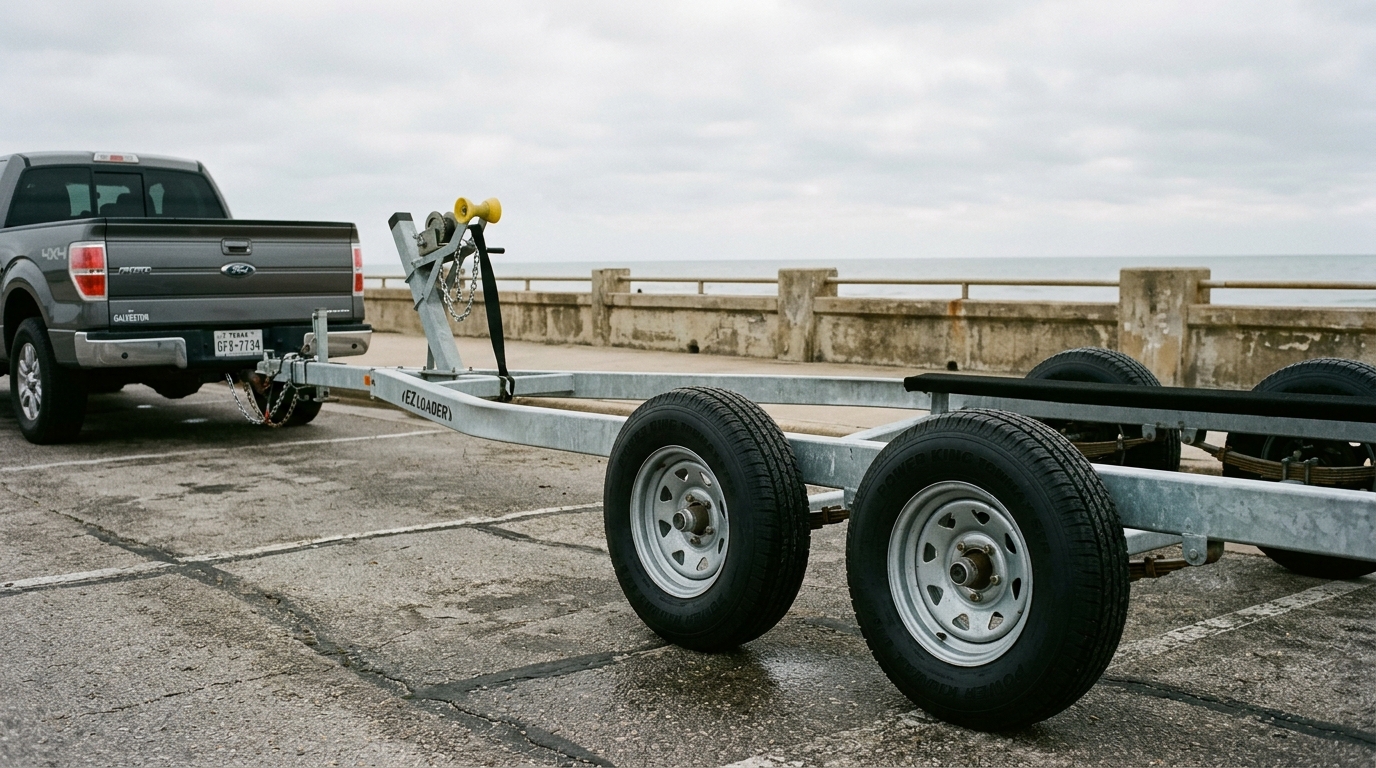
Trailer light issues are the most frequent problem we hear about from boaters in Dickinson and Santa Fe, and saltwater corrosion is almost always the culprit. Before you hitch up, have a helper verify that your running lights, brake lights, and both turn signals are functioning. The problem often lies in the ground connection. A weak ground, typically a white wire bolted to the trailer frame, is a prime spot for rust to disrupt the circuit. Upgrading to a marine-grade, waterproof wiring harness with heat-shrink sealed connections is the best defense against Galveston’s environment. A simple, cheap fix is to replace the standard bulb lights with a sealed, submersible LED light kit. LEDs are completely encased, draw less power, and eliminate the tiny sockets where saltwater can creep in and cause a short.
Brakes, Coupler, and Safety Chains: The Non-Negotiables
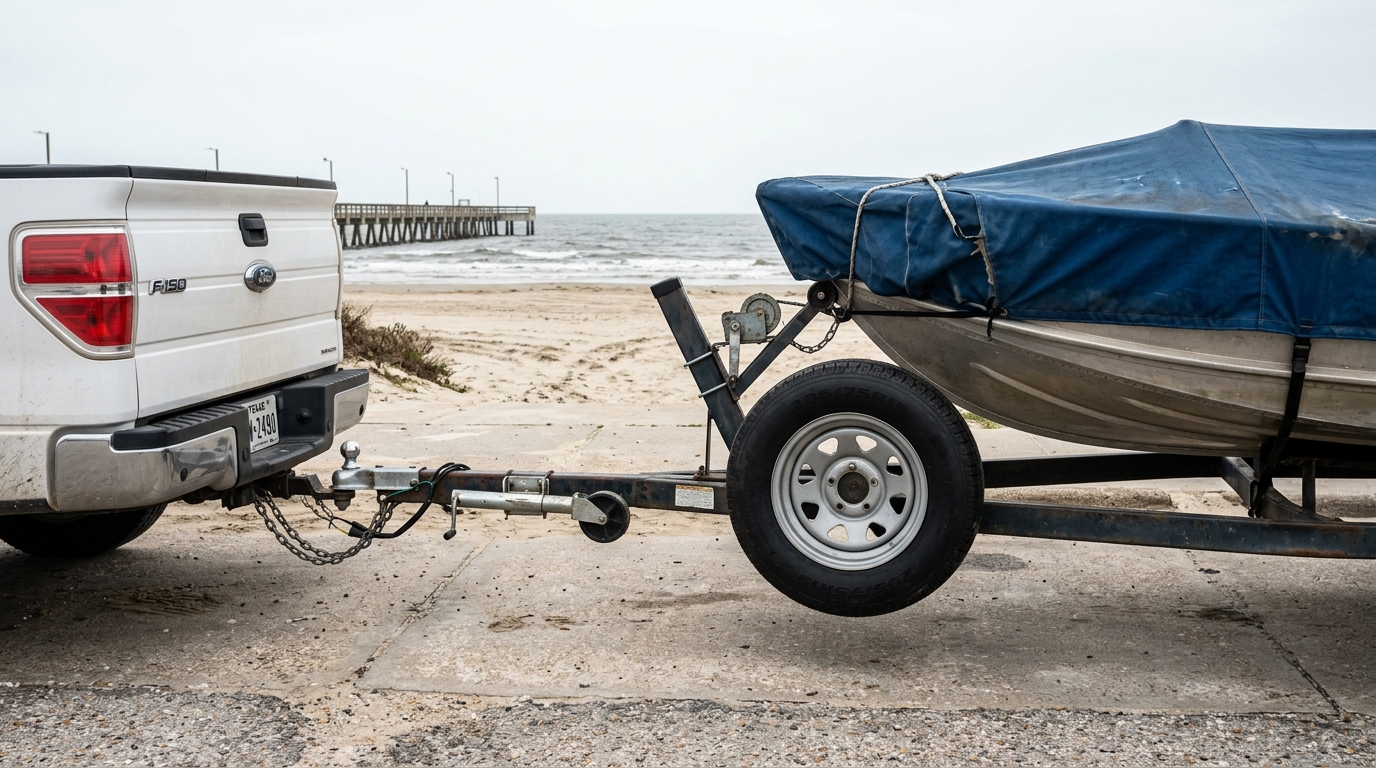
A functional braking system is a legal requirement and a life-saver in the stop-and-go traffic on Broadway Avenue. Test the brake actuator on the coupler by compressing it; it should feel firm and hydraulic. Inspect the brake lines for any signs of fluid leaks or rust, which are common on trailers that launch from the sandy, wet ramps near the San Luis Pass. The coupler itself must be securely latched onto your hitch ball, with the locking mechanism fully engaged and a pin or lock inserted through the latch. Finally, cross your safety chains under the coupler to create a cradle that will catch the tongue if it disconnects. Never use a bungee cord or a frayed chain—this is your final line of defense against a catastrophic runaway trailer heading toward the seawall.
The Insurance Gap: Trailer Coverage vs. Mechanical Breakdown
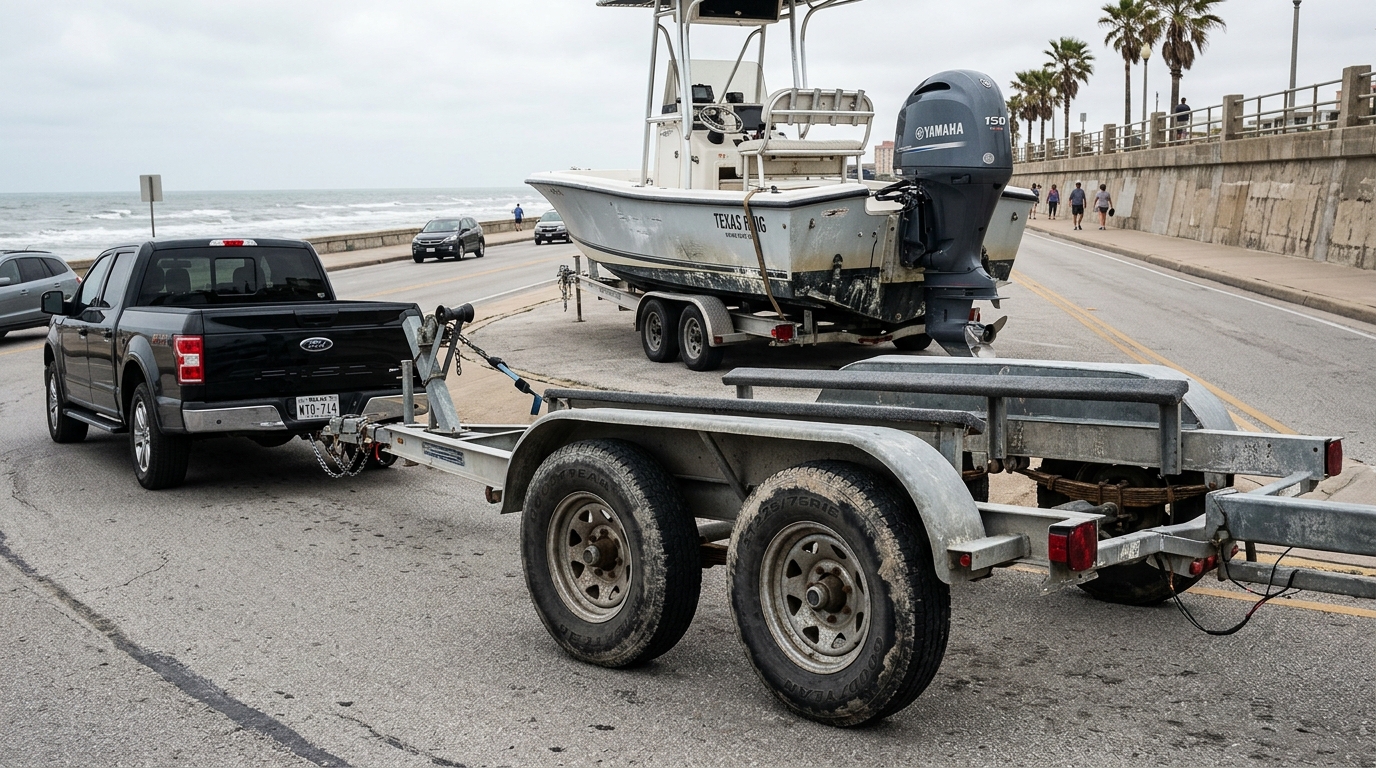
This is the part of the checklist where many Galveston boaters discover a dangerous gap in their protection. Your boat insurance policy may offer some limited liability while towing, but physical damage to the trailer itself is often an add-on, not a given. More critically, a standard policy covers sudden, accidental losses like a collision or theft, but it will not cover a mechanical breakdown. If your bearings seize up on the Gulf Freeway because they weren't repacked, the resulting damage to the axle, spindle, or even your boat is a maintenance issue, not an insurance claim. This is the fundamental difference: trailer coverage protects against accidents, while a mechanical breakdown is a wear-and-tear exclusion. Understanding this distinction is key to avoiding a costly out-of-pocket repair bill.
Tailoring Your Policy for a Long Haul to the Ramp
For a long haul to a distant ramp, like towing your boat from Friendswood to the far end of the island, you need to verify that your coverage limits are adequate, not just present. Review the agreed value of your trailer and ensure it's listed on your policy. If you have a custom or upgraded trailer, its value might exceed a standard limit. You should also confirm that your roadside assistance extends to your trailer. A standard auto club policy often excludes trailers, leaving you stranded if you get a flat tire on the causeway. A specialized boat insurance policy with trailer roadside assistance can cover tire changes, towing to the nearest repair shop, and even fuel delivery, getting you and your boat to safety without a massive out-of-pocket expense. This is a crucial consideration for anyone regularly towing through the Clear Lake and Galveston area.
A Pre-Trip Walk-Around for Galveston Tides and Ramps
Beyond the mechanical checklist, a final walk-around tailored to Galveston’s specific ramps can prevent a headache. Check your trailer's bow roller and winch strap for fraying—a weak strap can snap under the load of a heavy boat being retrieved against a strong outgoing tide at the Galveston Island State Park ramp. Ensure your transom tie-down straps are in good condition and securely fastened to prevent the boat from bouncing on the trailer during the drive over the sometimes-uneven roads near Offatts Bayou. Also, give thought to your trailer's bunks or rollers. Make sure they are properly adjusted to support the hull. A misaligned bunk can create a pressure point that damages your boat's gel coat over thousands of miles of towing around Texas City and La Marque. This final check is about protecting your boat from the trailer itself.
Partnering with a Local Expert for Peace of Mind
The difference between a standard policy and one that truly protects a Galveston boater comes down to local expertise. We at The O'Donohoe Agency live and boat in this community. We understand the specific perils of the Gulf Coast, from the corrosive salt air that eats away at wiring to the specific towing hazards on our local roads. We can help you review your current boat and trailer policy, identify any coverage gaps related to mechanical breakdown versus accidental damage, and ensure your agreed values are up to date. Before you hitch up for your next trip, take the time to not just check your tire pressure, but to check your coverage. A quick conversation with a local agent can provide the peace of mind that lets you focus on the fish, not the trailer.
Your Galveston Trailer Readiness Checklist
- Rinse the entire trailer, brakes, and springs with fresh water after every saltwater launch.
- Check tire pressure and inspect sidewalls for cracks, including the spare.
- Test all lights and replace any faulty bulbs with sealed, submersible LED units.
- Verify the coupler latch and pin, and cross safety chains correctly.
- Confirm your insurance policy lists the trailer with an accurate agreed value.
- Review your roadside assistance to ensure it covers your trailer.

