

The Real Cost of a Breakdown on Galveston Bay
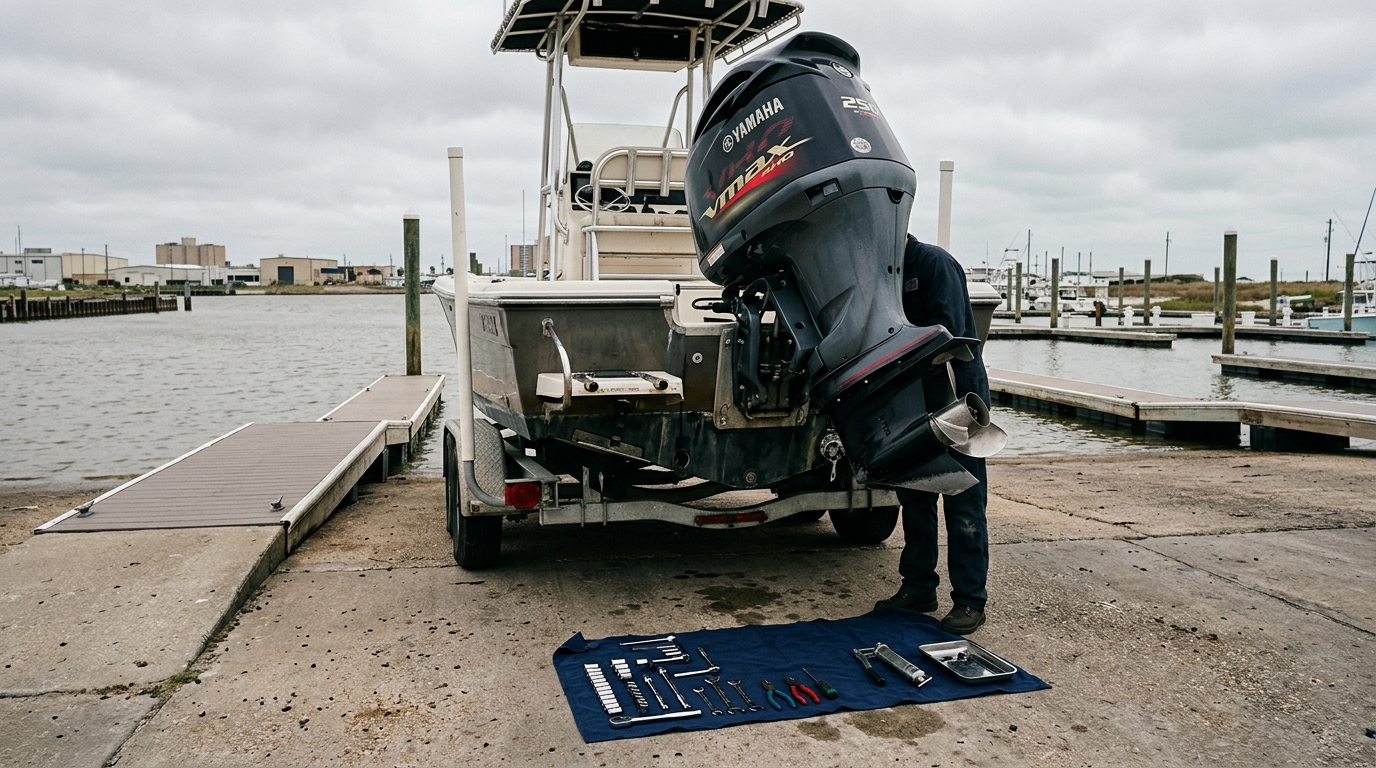
Picture this: you're a few miles out of Galveston, heading toward the jetties for a day of fishing, when your engine sputters and dies. A tow back to the marina is just the beginning. The real financial sting comes when the mechanic delivers the news about a major internal failure. For many boat owners in Galveston, Texas City, and the Clear Lake area, a single catastrophic engine failure can cost more than the boat's annual slip fees. This is the exact scenario where mechanical breakdown coverage, often called MBI, steps in. But is it always a smart buy? The answer isn't a simple yes or no. It hinges almost entirely on the age and type of engine pushing your boat, and how you use it in the unique waters around Galveston.
What Exactly is Mechanical Breakdown Coverage?
Mechanical breakdown coverage is separate from a standard boat insurance policy, which typically covers sudden, accidental damage from things like collisions or storms. MBI is designed to cover the cost of repairing or replacing key mechanical components, primarily the engine and drive train, when they fail due to internal issues like a thrown rod, a failed powerhead, or a seized lower unit. It's essentially a warranty for your boat's most expensive parts, but it's offered by insurance carriers. The coverage is not for routine maintenance or wear and tear items like impellers, belts, or spark plugs. It's for the sudden, unexpected failures that leave you stranded. Understanding this distinction is the first step in deciding if it's right for your vessel, whether you dock in Dickinson or keep your boat on a lift in League City.
The New Engine Advantage: The Case of a New Mercury Outboard
Let's consider a brand-new Mercury 150hp FourStroke outboard on a 22-foot bay boat. For an engine like this, mechanical breakdown coverage is often surprisingly affordable and readily available. The risk to the insurance carrier is low, as the manufacturer's warranty is in effect, and the engine's reliability is at its peak. MBI on a new engine acts as a long-term hedge. You can often lock in a low premium for a multi-year policy, extending your peace of mind well beyond the factory warranty period. For a Galveston angler who runs their boat hard, logging hundreds of hours each year, this can be a very wise investment. A single major failure of the powerhead after the warranty expires could easily exceed five thousand dollars, making the relatively small annual MBI premium look like a bargain.
The Aging Engine Dilemma: A 15-Year-Old Inboard Diesel in a Trawler
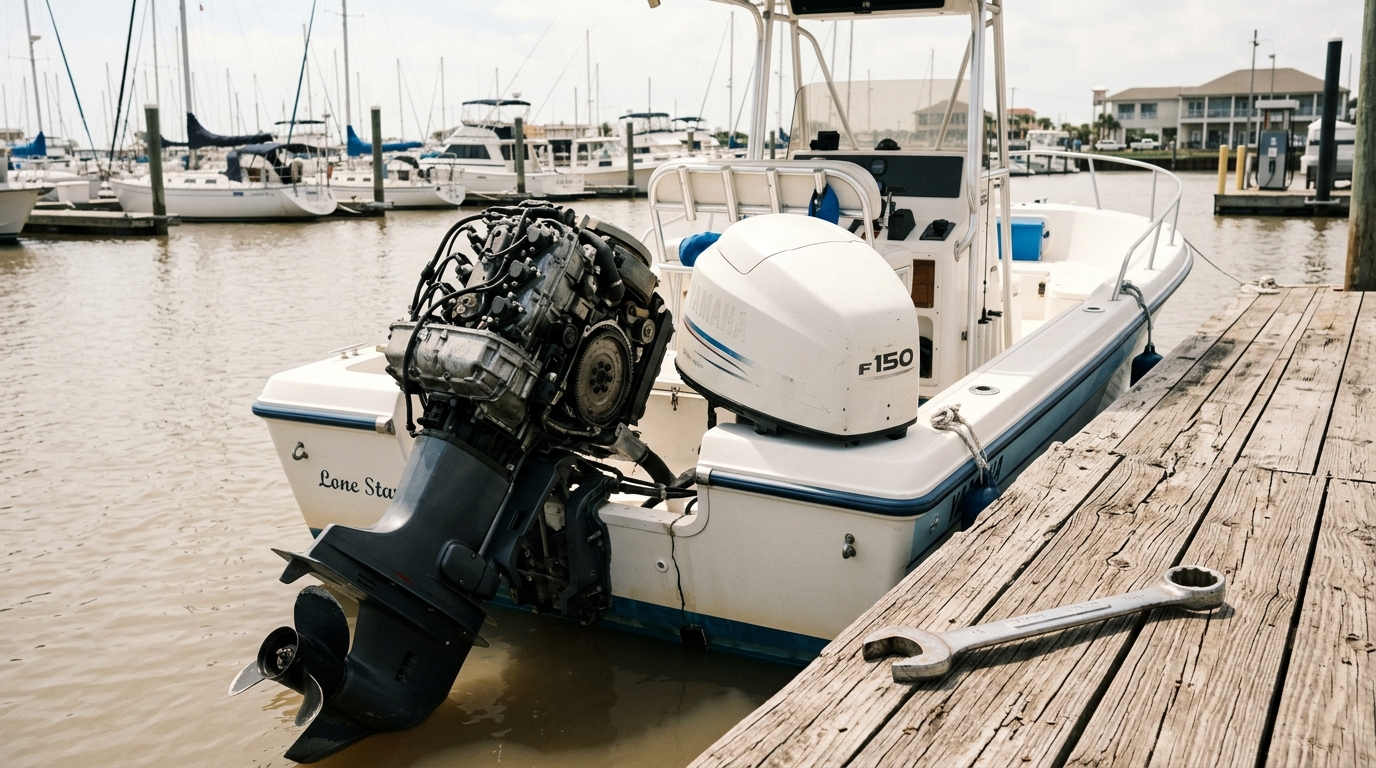
Now, shift to a completely different scenario: a 15-year-old inboard diesel engine in a trawler docked at a Galveston marina. This is where the decision gets much more complex. For a well-maintained but older engine, mechanical breakdown coverage becomes more expensive and harder to find. Many carriers will require a full marine survey, including a detailed engine analysis, before offering a quote. The coverage might come with a higher deductible and may exclude certain components that are already considered high-risk due to age. The question for the owner becomes a pure financial calculation. Is the annual premium, which could be one to two thousand dollars or more, justified by the risk of a catastrophic failure on an engine that might be worth eight to fifteen thousand dollars to replace? For many, the answer may be to self-insure by setting aside a dedicated maintenance and repair fund.
How Engine Age and Type Affect Your Premium and Options
The cost and availability of mechanical breakdown coverage are not a mystery. They follow a clear pattern based on engine age. For outboards, sterndrives, and inboards less than five years old, you'll find the most competitive rates and the broadest coverage. Between five and ten years, premiums increase, and a survey is almost always required. Coverage for engines over ten years old is considered a specialty product, with premiums that rise significantly and may only cover the engine's lower unit or major internal components, not the entire system. The type of engine also matters. A simple, naturally aspirated diesel is often viewed more favorably than a high-performance, supercharged gasoline engine, as the diesel is seen as having a longer, more durable lifespan. This is crucial knowledge for boaters in Santa Fe and Friendswood who are considering buying an older vessel.
Local Factors: Why Galveston Boating is Harder on Engines
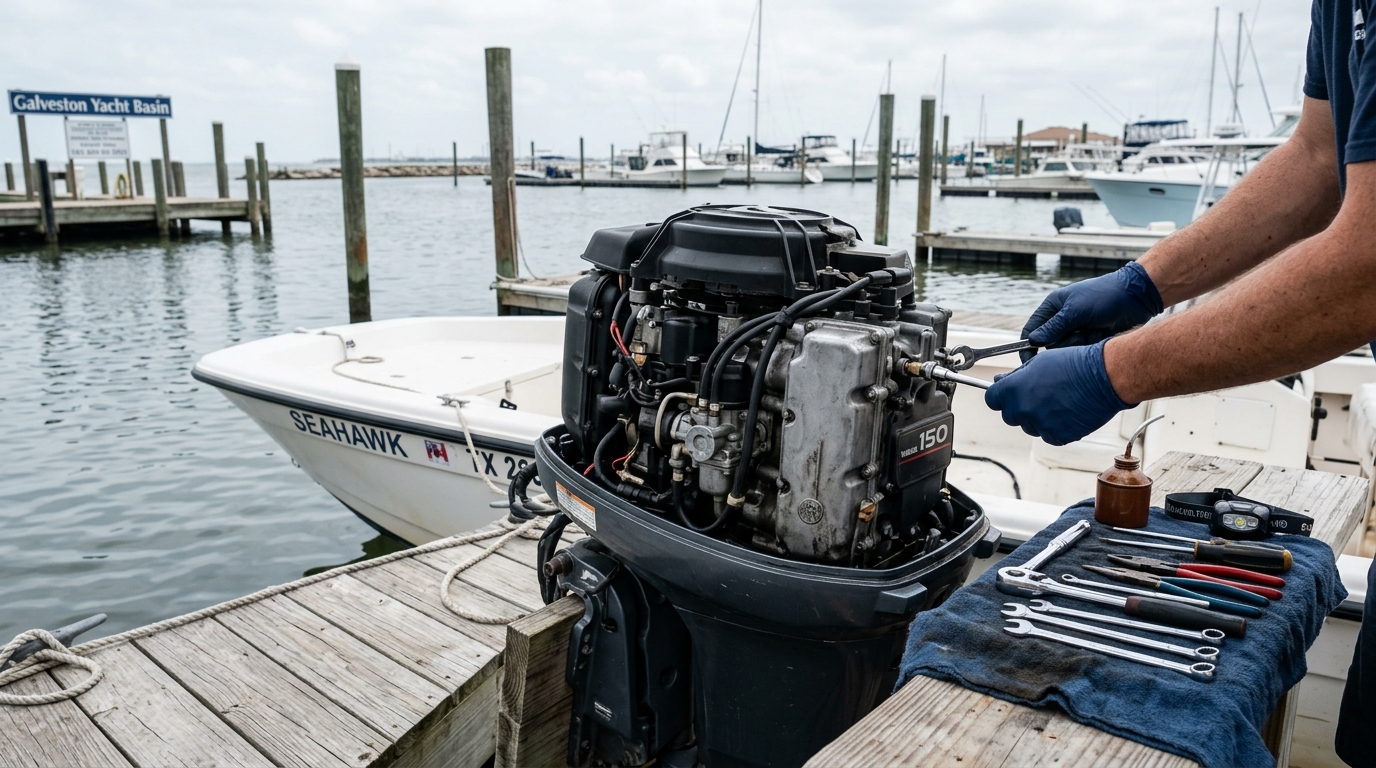
Your boating environment in Galveston should be a major factor in your decision. The warm, salty, and often silty waters of Galveston Bay and the Gulf of Mexico are a harsh combination for marine engines. Corrosion is a constant battle, and the fine sediment can accelerate wear on water pumps and cooling passages. A boat that spends its life in the clear, fresh water of a northern lake will have a very different engine health profile than one regularly run from Texas City to the Galveston jetties. This local reality means that a five-year-old engine in Galveston might have the same level of internal wear and corrosion risk as a much older engine in a less demanding environment. This is a key point to discuss with an agent who understands the local waters, as it directly impacts the value of mechanical breakdown coverage for your specific situation.
A Decision-Making Framework for Galveston Boat Owners
Key Questions to Ask Yourself
- Engine Age and Type: Is your engine under 5 years old? If so, MBI is likely a great value. Is it over 10? You'll need to carefully compare the premium to the engine's depreciated value.
- Usage Profile: Do you frequently run offshore or make long trips to remote areas? The cost of a tow from 30 miles out is substantial, and MBI provides a crucial safety net.
- Maintenance History: Do you have meticulous, documented service records? This is often required for coverage on older engines and can help you secure a better rate.
- Financial Cushion: Could you comfortably pay for a 10,000-dollar engine replacement out of pocket? If not, the predictable cost of an MBI premium can protect you from a financial shock.

The Self-Insurance Alternative: Building a 'Boat Fund'
For owners of older boats, particularly those with engines over 10 or 15 years old, the most financially sound strategy might be to skip the expensive mechanical breakdown coverage and instead build a dedicated 'boat fund.' The logic is simple: take the money you would have paid in annual premiums and put it into a high-yield savings account. Over a few years, you can build a substantial cushion to cover a major repair or even a full repower. This approach requires discipline, but it keeps the money in your pocket rather than an insurance company's. This is a common and effective strategy for savvy boaters in Dickinson and La Marque who own well-maintained, older vessels. The key is to be honest about the engine's condition and have a realistic plan for when, not if, a major repair will be needed.
Get Expert Guidance for Your Galveston Boat
Deciding on mechanical breakdown coverage is a personal calculation that blends the hard numbers of your engine's value with the soft factors of your risk tolerance and how you use your boat around Galveston. There's no one-size-fits-all answer. The best next step is to talk through your specific situation with a knowledgeable agent who can shop the market for you. At The O'Donohoe Agency, we specialize in the nuances of protecting boats on the Texas Gulf Coast. We can help you weigh the cost of coverage against the risk of a breakdown, and find the right policy to match your boat, your engine, and your budget. Reach out to us for a conversation, and let's make sure you're covered before your next trip out of the Galveston jetties.
